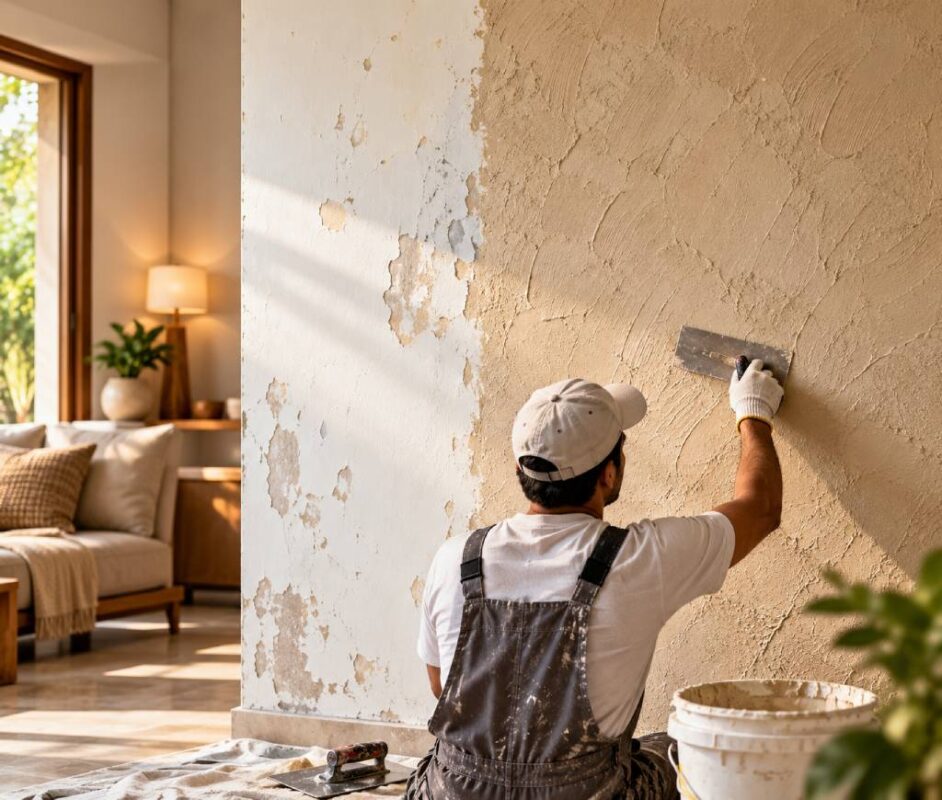


India is home to some of the world’s most remarkable architectural treasures. From centuries-old forts and palaces to temples, churches, havelis, colonial buildings, and traditional homes, these structures tell stories of our rich cultural and architectural heritage. Preserving them requires much more than repairing damaged walls or applying a fresh coat of paint. Restoration is about maintaining the authenticity of the original structure while ensuring it remains durable for future generations.
One of the most important decisions during any restoration project is selecting the right wall finish. While modern cement plaster is widely used in contemporary construction, it is often unsuitable for older masonry buildings. This is why architects, conservation experts, and restoration specialists continue to recommend lime plaster for heritage buildings.
Lime plaster has been used in Indian architecture for centuries. Many historic monuments that still stand today owe their longevity to traditional lime-based construction techniques. Its unique ability to breathe, accommodate structural movement, and age naturally makes it one of the most suitable materials for restoring heritage structures. In this article, we’ll explore why lime plaster remains the preferred choice for conservation projects and how it compares with modern alternatives.
Understanding Lime Plaster
Lime plaster is a traditional building material made primarily from lime, fine sand, and water. Depending on the restoration requirements, natural additives such as marble dust, stone powder, or organic fibres may also be incorporated to enhance strength and workability.
Unlike cement plaster, which creates a rigid and dense surface, lime plaster cures gradually by absorbing carbon dioxide from the atmosphere. This natural carbonation process produces a finish that remains flexible, breathable, and compatible with traditional masonry.
For centuries, lime plaster has been used across India in the construction of forts, temples, palaces, heritage homes, stepwells, and colonial buildings. Many of these structures continue to survive because lime-based materials work harmoniously with traditional brick and stone masonry rather than restricting their natural movement.
Why Cement Isn’t Always Suitable for Heritage Buildings
Modern cement plaster is designed for contemporary reinforced concrete structures. It provides high compressive strength and fast curing, making it ideal for new construction. However, heritage buildings were originally built using lime mortar, natural stone, handmade bricks, and traditional construction techniques that behave very differently from modern concrete.
Applying cement plaster over old masonry often creates compatibility issues. Cement forms a hard, impermeable layer that traps moisture within historic walls. Over time, this trapped moisture can weaken bricks and stones, cause salt deposits, and lead to plaster failure. Since cement is considerably more rigid than traditional masonry, it is also more prone to cracking when older buildings experience natural settlement or thermal movement.
For this reason, conservation architects generally avoid replacing original lime finishes with cement during restoration work.
Why Lime Plaster is Ideal for Heritage Buildings
One of the biggest reasons professionals recommend lime plaster for heritage buildings is its compatibility with traditional construction materials.
Historic structures were never designed to function with rigid cement coatings. Lime plaster moves naturally with old masonry, allowing buildings to expand, contract, and settle without developing severe surface cracks. This flexibility significantly reduces stress on fragile walls and helps preserve the structural integrity of the building.
Equally important is its ability to maintain the original appearance of heritage architecture. Lime plaster creates a soft, natural finish that closely resembles the textures used centuries ago, ensuring restoration work remains visually authentic.
Breathability: The Key Advantage of Lime Plaster
Perhaps the greatest strength of lime plaster is its breathability.
Traditional masonry constantly absorbs and releases moisture depending on environmental conditions. A breathable masonry coating like lime plaster allows water vapour to escape naturally through the wall, preventing moisture from becoming trapped inside the structure.
This process plays a crucial role in protecting historic buildings from dampness, peeling finishes, mould growth, and salt crystallisation. Rather than forcing moisture to remain inside the wall, lime plaster helps regulate humidity, keeping the masonry healthier over time.
In India’s diverse climate, where heritage buildings experience intense heat, heavy monsoon rains, and fluctuating humidity levels, this breathability becomes especially valuable.
Flexibility Helps Preserve Historic Structures
Unlike modern cement finishes, lime plaster possesses a degree of natural flexibility.
Older buildings continuously experience small structural movements caused by temperature variations, foundation settlement, and ageing materials. A rigid surface coating may crack under these conditions, allowing water to penetrate the masonry.
Lime plaster accommodates these minor movements more effectively, reducing the likelihood of significant cracking. This flexibility contributes to the long-term durability of both the plaster and the underlying historic structure.
For conservation projects, preserving existing masonry is often more important than simply applying a strong surface finish. Lime plaster supports this objective by working with the building rather than against it.
Maintaining Historical Authenticity
Restoration is fundamentally different from renovation.
The objective of a restoration project is not to modernise the building but to preserve its historical character. Every material selected should remain as close as possible to the original construction techniques.
A traditional wall finish such as lime plaster respects the building’s original craftsmanship. Its texture, colour variation, and natural ageing process closely resemble the finishes used by historical artisans. Unlike synthetic paints or cement coatings, lime develops a graceful patina over time that enhances the building’s authentic appearance.
This is one of the primary reasons why conservation authorities often recommend lime-based materials for protected monuments and heritage structures.
Durability That Has Stood the Test of Time
One of the strongest arguments in favour of lime plaster is history itself.
Many forts, temples, churches, and palaces across India have survived for hundreds of years using lime-based construction. Their longevity demonstrates that properly prepared lime plaster is not only aesthetically pleasing but also remarkably durable.
As lime gradually carbonates, it continues strengthening over time while maintaining its breathable characteristics. Minor surface cracks may even heal naturally through a process known as autogenous healing, where dissolved lime particles react with rainwater and carbon dioxide to seal tiny fissures.
Few modern materials offer this remarkable ability to repair themselves naturally.
Lime Plaster in Modern Restoration Projects
Although lime plaster is associated with historic buildings, it continues to play an important role in contemporary restoration projects.
Across India, architects restoring colonial bungalows, heritage hotels, boutique resorts, museums, temples, churches, and traditional homes increasingly specify specialised restoration plaster systems based on lime.
These materials successfully combine traditional aesthetics with carefully engineered formulations that improve consistency and performance while respecting historical authenticity.
Even homeowners renovating century-old family homes are recognising the value of preserving original lime finishes instead of replacing them with cement.
Environmental Benefits of Lime Plaster
Sustainability has become an important consideration in modern architecture, and lime plaster offers several environmental advantages.
Compared to cement production, lime manufacturing generally requires lower firing temperatures, resulting in reduced energy consumption. During its curing process, lime plaster gradually reabsorbs carbon dioxide from the atmosphere through carbonation, partially offsetting emissions generated during manufacturing.
Its long lifespan further contributes to sustainability by reducing the frequency of repairs and replacement. Combined with natural raw materials and minimal chemical additives, lime plaster aligns well with environmentally responsible restoration practices.
Is Lime Plaster More Expensive?
One common misconception is that lime plaster is significantly more expensive than cement.
While the material itself and the specialised craftsmanship required may increase the initial project cost, restoration should always be evaluated over the building’s long-term performance rather than immediate installation expenses.
Using incompatible cement plaster on heritage buildings often leads to moisture damage, recurring repairs, and deterioration of original masonry. These long-term repair costs frequently exceed the initial savings achieved by choosing cement.
Investing in appropriate lime-based materials helps protect the building’s structural integrity while reducing future maintenance requirements.
Why Professional Application Matters
The success of any lime plaster project depends heavily on proper workmanship.
Historic walls require careful inspection before restoration begins. Loose plaster, damaged masonry, salts, and moisture-related issues must be addressed before applying new finishes. The plaster mix itself must also be compatible with the existing building materials.
Experienced restoration specialists understand the importance of selecting the correct lime formulation, applying multiple coats where required, allowing adequate curing time, and preserving original architectural details.
Without this expertise, even high-quality materials may fail to deliver their intended performance.
Why Choose Instakrete?
At Instakrete, we believe that restoration is about preserving history while enhancing long-term durability. Our decorative and heritage-friendly surface solutions are designed to respect traditional architecture without compromising on quality or craftsmanship.
Whether you’re restoring a heritage bungalow, renovating a colonial property, conserving a historic façade, or recreating a timeless architectural finish, our experienced team focuses on material compatibility, authentic textures, and precision application. Every project is approached with careful planning to ensure the final finish reflects the original character of the structure while delivering reliable performance for years to come.
Conclusion
India’s architectural heritage deserves restoration methods that respect both its history and its construction techniques. Choosing lime plaster for heritage buildings is not simply about maintaining an old tradition—it’s about using a material that works in harmony with historic masonry. Its exceptional breathability, flexibility, durability, and authentic appearance make it one of the most reliable solutions for conservation and restoration projects.
Whether you’re restoring a centuries-old haveli, renovating a colonial residence, or preserving a historic temple, lime plaster provides a proven solution that protects the building while retaining its original character. As a highly effective restoration plaster, a breathable masonry coating, and a timeless traditional wall finish, lime plaster continues to play a vital role in safeguarding India’s architectural legacy for future generations.