
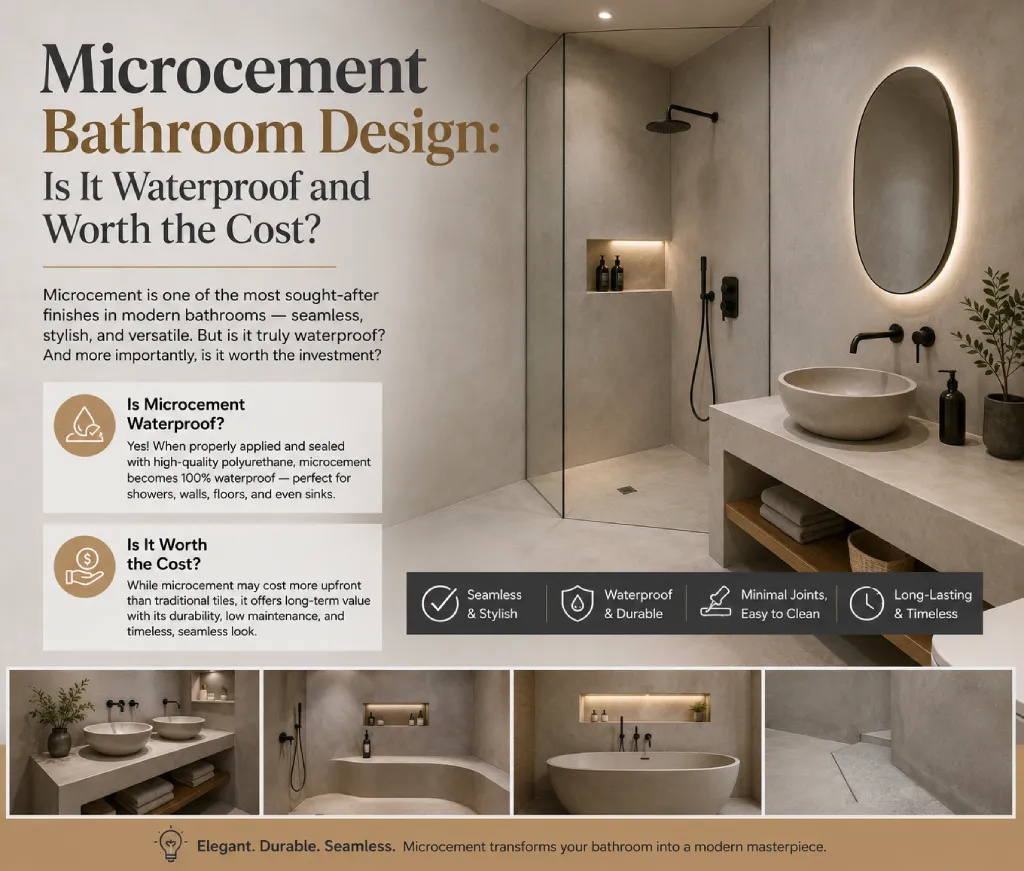
Bathrooms have evolved from being purely functional spaces into personal retreats that reflect modern lifestyles and design preferences. Today’s homeowners are moving away from traditional tiles and grout lines in favour of seamless, minimalist finishes that are easier to maintain and visually more sophisticated. One material that has rapidly gained popularity among architects and interior designers is microcement.
A microcement bathroom offers a sleek, contemporary appearance with continuous surfaces that can be applied to walls, floors, vanity counters, and even shower areas. Its seamless finish creates a spacious, luxurious look while eliminating many of the maintenance challenges associated with conventional tiles. However, despite its growing popularity, many homeowners still ask an important question—is microcement truly waterproof, and is it worth the investment?
The answer is yes, but only when it is installed correctly using high-quality materials and the proper waterproofing system. In this article, we’ll explore everything you need to know about microcement bathrooms, including their waterproofing capabilities, installation process, maintenance requirements, design possibilities, and long-term value.
What is Microcement?
Microcement is a premium decorative coating made from cement-based compounds, fine aggregates, polymers, additives, and pigments. Unlike traditional cement finishes, it is applied in thin layers, typically between 2 and 3 millimetres, over existing surfaces such as concrete, tiles, plaster, gypsum boards, or cement boards.
One of its biggest advantages is that it can transform an existing bathroom without requiring the removal of old tiles. This significantly reduces demolition work, construction waste, and renovation time.
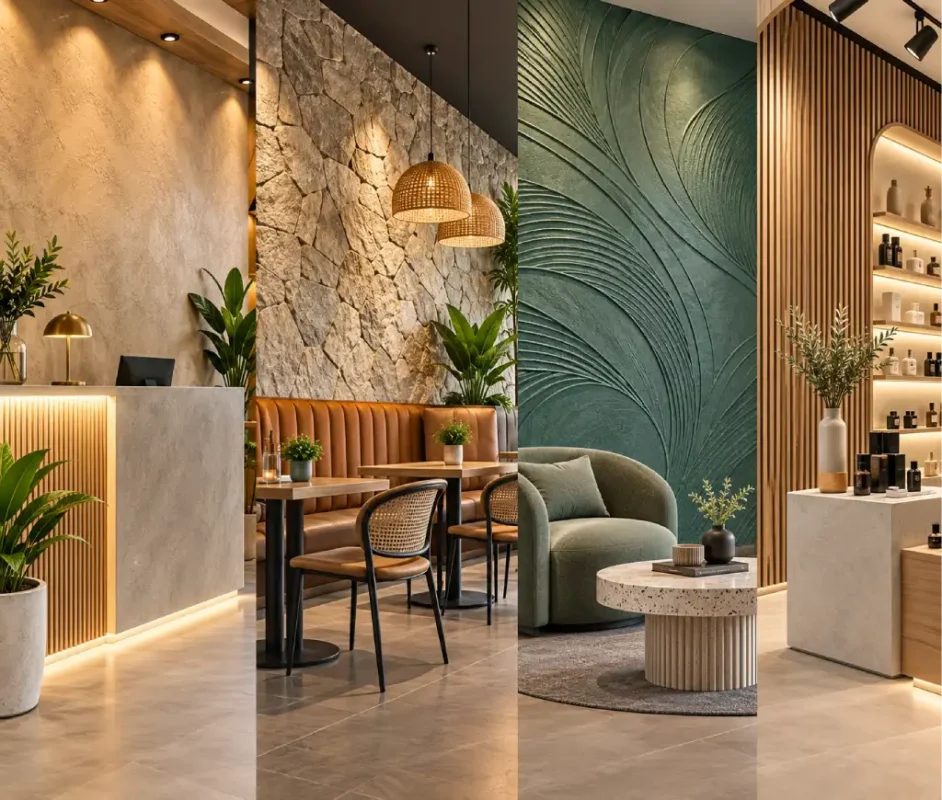
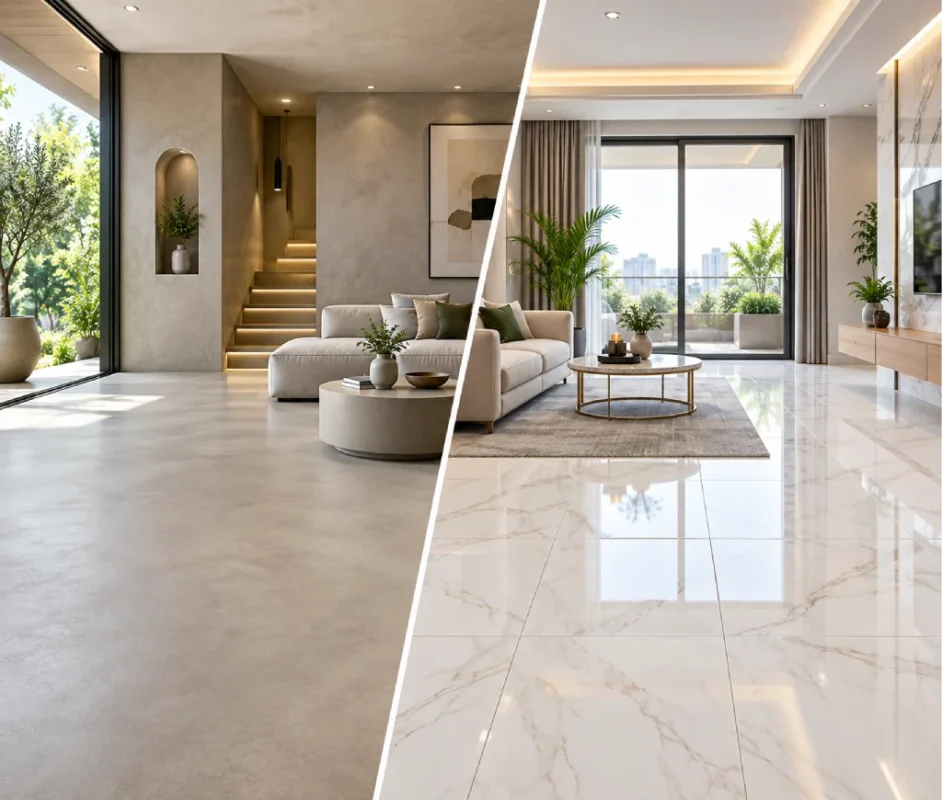
A microcement wall or floor creates a continuous surface with no visible joints, making it one of the most elegant finishes available for modern interiors. Its ability to imitate polished concrete, natural stone, or customised textures has made it a preferred material for luxury residences, boutique hotels, spas, and premium commercial spaces.
Why Are Microcement Bathrooms Becoming So Popular?
Modern interior design is increasingly focused on simplicity, clean lines, and uninterrupted surfaces. Traditional tiled bathrooms often contain numerous grout joints that collect dirt, moisture, and mildew over time. Maintaining these joints requires frequent cleaning and periodic regrouting.
A microcement bathroom eliminates these issues by creating a seamless finish across walls and floors. Without visible joints, the space appears larger, cleaner, and more luxurious. The continuous finish also allows designers to create visually connected bathrooms where the floor flows seamlessly into shower areas and walls.
Its versatility makes it suitable for both compact apartments and spacious luxury bathrooms. Whether you prefer industrial, Scandinavian, minimalist, contemporary, or Mediterranean interiors, microcement complements almost every architectural style.
Is Microcement Waterproof?
This is one of the most frequently asked questions—and one of the biggest misconceptions.
Microcement itself is not inherently waterproof. However, a professionally installed microcement system becomes highly water-resistant through a combination of waterproof membranes, specialised primers, multiple microcement layers, and protective polyurethane sealers.
The waterproofing performance depends entirely on following the correct application process. Before applying microcement, installers prepare the substrate and install appropriate waterproofing systems, particularly in wet areas such as shower enclosures. Once the decorative layers are completed, high-performance sealers create a protective barrier that prevents water penetration while maintaining the beautiful finish.
When installed by experienced professionals, a waterproof bathroom finish using microcement performs exceptionally well even in areas exposed to constant moisture.
How is a Microcement Bathroom Installed?
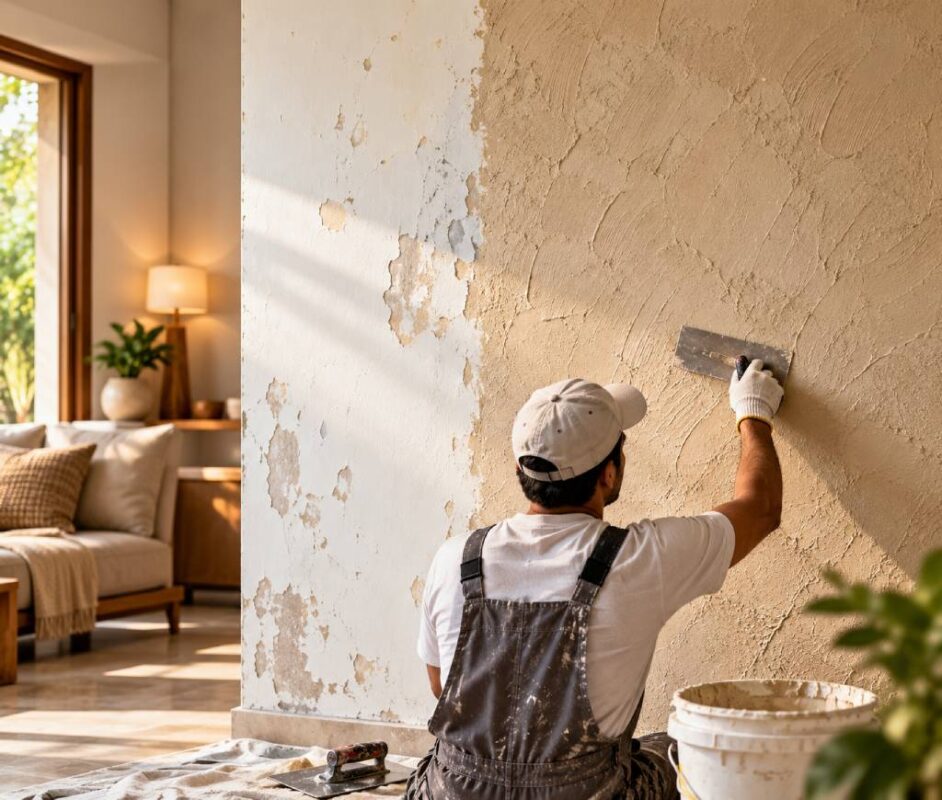
One of the reasons microcement has become so popular is its ability to renovate existing bathrooms without extensive demolition. Instead of removing old tiles, the coating can often be applied directly over them after proper preparation.
The installation begins with inspecting and repairing the existing surface to ensure it is stable and level. A suitable primer is then applied to improve adhesion. In wet zones such as shower areas, waterproofing membranes are installed to protect the substrate from moisture.
Multiple thin layers of microcement are then applied, with careful sanding between coats to achieve a perfectly smooth finish. Once the desired texture and colour are achieved, the surface is sealed using high-quality protective coatings that enhance durability, stain resistance, and waterproofing.
Although the process requires skilled craftsmanship, it is generally faster and cleaner than completely rebuilding a tiled bathroom.
Design Possibilities with Microcement
One of the greatest advantages of microcement is its design flexibility. Unlike tiles that are limited by standard sizes and grout joints, microcement creates completely continuous surfaces that can be customised in colour, texture, and finish.
A microcement wall can become a striking feature behind a vanity or extend throughout the entire bathroom to create a spa-like atmosphere. The same finish can continue across the floor, shower enclosure, shelving, and even countertops, resulting in a cohesive and elegant interior.
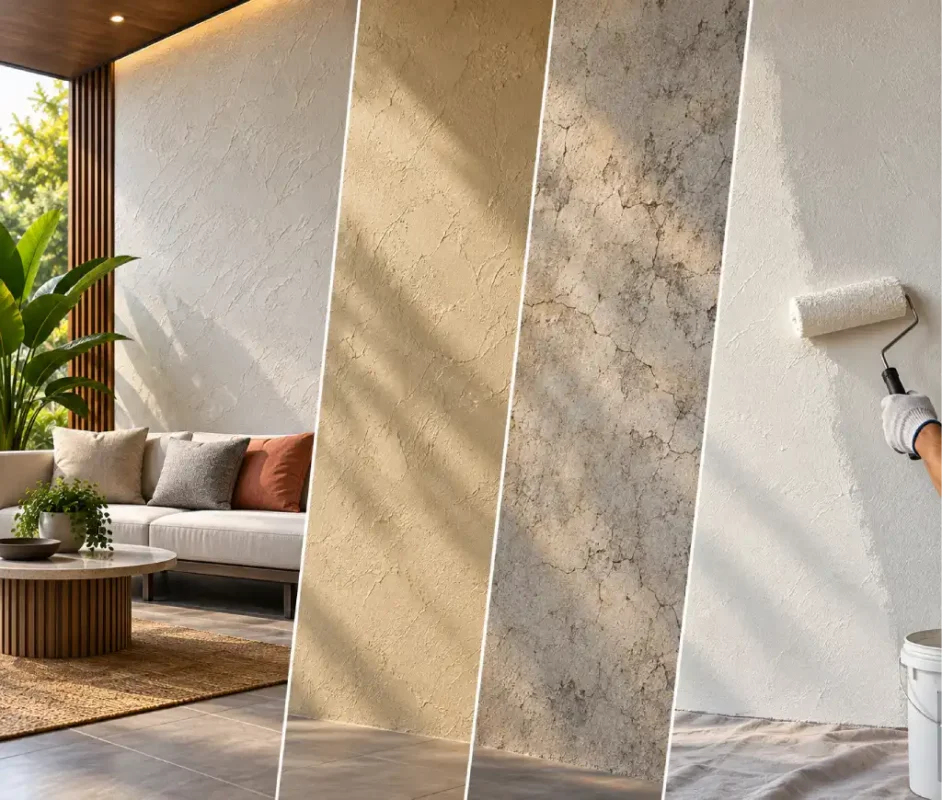
Homeowners can choose from soft neutral shades such as grey, beige, white, and taupe for minimalist spaces or experiment with darker tones for dramatic contemporary interiors. Matte, satin, and textured finishes further expand the design possibilities, allowing each bathroom to reflect the homeowner’s personal style.
Seamless Flooring: A Practical Advantage
Apart from aesthetics, seamless bathroom flooring offers several practical benefits. Without grout joints, there are fewer places for dirt, mould, and bacteria to accumulate, making routine cleaning much easier.
The continuous surface also creates a greater sense of space, especially in smaller bathrooms where visual interruptions can make the room appear more compact. Many designers deliberately choose seamless flooring to achieve a luxurious hotel-style appearance that feels calm, open, and sophisticated.
In addition, the absence of joints reduces the likelihood of water seepage caused by damaged grout lines, provided the waterproofing system has been installed correctly.
Durability and Daily Performance
Bathrooms experience constant exposure to water, humidity, cleaning chemicals, and daily foot traffic. A professionally installed microcement system is designed to withstand these conditions while maintaining its appearance for many years.
Its high resistance to abrasion, stains, and moisture makes it suitable for both residential and commercial bathrooms. Since the material bonds directly to the substrate, it also reduces the risk of hollow tiles or loose flooring commonly encountered in conventional installations.
However, like any premium surface, its durability depends on proper installation and routine maintenance. Using harsh acidic cleaners or abrasive scrubbing pads should be avoided to preserve the protective sealers.
Is Microcement Expensive?
One of the first questions homeowners ask is whether a microcement bathroom costs more than traditional tiles.
The initial installation cost of microcement is generally higher than standard ceramic tile finishes because it requires specialised materials, multiple application stages, and experienced craftsmen. However, comparing only the installation cost doesn’t present the complete picture.
Since microcement can often be applied over existing tiles, homeowners save on demolition, debris removal, disposal costs, and reconstruction work. Renovation timelines are also significantly shorter, reducing labour costs and inconvenience.
Additionally, lower maintenance requirements and the long lifespan of properly installed microcement contribute to better long-term value. Instead of viewing microcement purely as an expense, many homeowners consider it an investment in both aesthetics and durability.
Is Microcement Suitable for Every Bathroom?
Microcement performs exceptionally well in most residential and commercial bathrooms, provided the underlying substrate is stable and professionally prepared.
It is particularly suitable for:
- Luxury residential bathrooms
- Apartments undergoing renovation
- Hotels and resorts
- Spa and wellness centres
- Boutique commercial washrooms
- Contemporary villas
Its versatility allows designers to create cohesive interiors where floors, walls, shower niches, and vanity areas seamlessly integrate into one elegant design language.
Why Choose Instakrete for Your Microcement Bathroom?
At Instakrete, we specialise in premium decorative surface solutions that combine aesthetics with long-term performance. Our microcement systems are carefully installed using high-quality materials, professional waterproofing techniques, and skilled craftsmanship to ensure lasting durability.
Whether you’re renovating a compact apartment bathroom or designing a luxurious spa-inspired master suite, our team provides customised finishes that align with your vision while delivering exceptional functionality. From colour selection to final sealing, every stage of the installation is executed with precision and attention to detail.
Conclusion
A microcement bathroom is much more than a modern design trend—it is a practical, durable, and elegant solution for homeowners seeking seamless interiors with minimal maintenance. While microcement itself is not naturally waterproof, a professionally installed system incorporating proper waterproofing layers and protective sealers provides excellent moisture resistance, making it ideal for bathrooms, shower areas, and wet zones.
Its ability to create a waterproof bathroom finish, elegant microcement wall designs, and seamless bathroom flooring makes it one of the most versatile decorative materials available today. Although the initial investment may be higher than conventional tiling, the long-term benefits of reduced maintenance, faster renovations, timeless aesthetics, and lasting durability make microcement a worthwhile choice for modern homes.
If you’re planning to transform your bathroom into a stylish, contemporary space, Instakrete’s expert microcement solutions can help you achieve a finish that combines luxury, performance, and lasting value.