
A garden pathway does much more than connect one part of your outdoor space to another. It helps define the landscape, creates visual flow and gives the garden a sense of structure. While traditional pavers, concrete slabs and natural stone remain popular, homeowners and designers are increasingly looking for finishes that feel more organic and visually connected to nature.
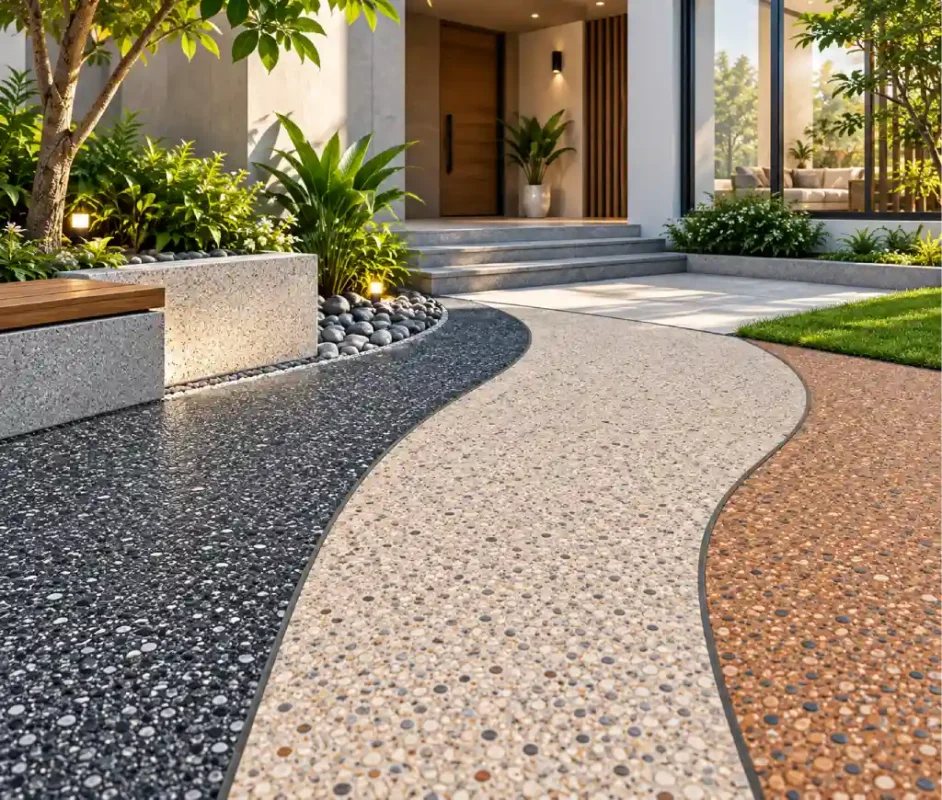
This is where pebblecrete garden pathway ideas can make a difference.
Pebblecrete combines a cementitious surface with decorative natural aggregates, creating a textured, stone-like finish that can complement gardens beautifully. Its earthy appearance works particularly well alongside plants, lawns, trees, stone features and outdoor seating areas.
Whether you are designing a compact home garden or a larger landscaped property, Pebblecrete offers plenty of possibilities for creating a pathway that is both practical and visually distinctive.
What Is Pebblecrete Flooring?
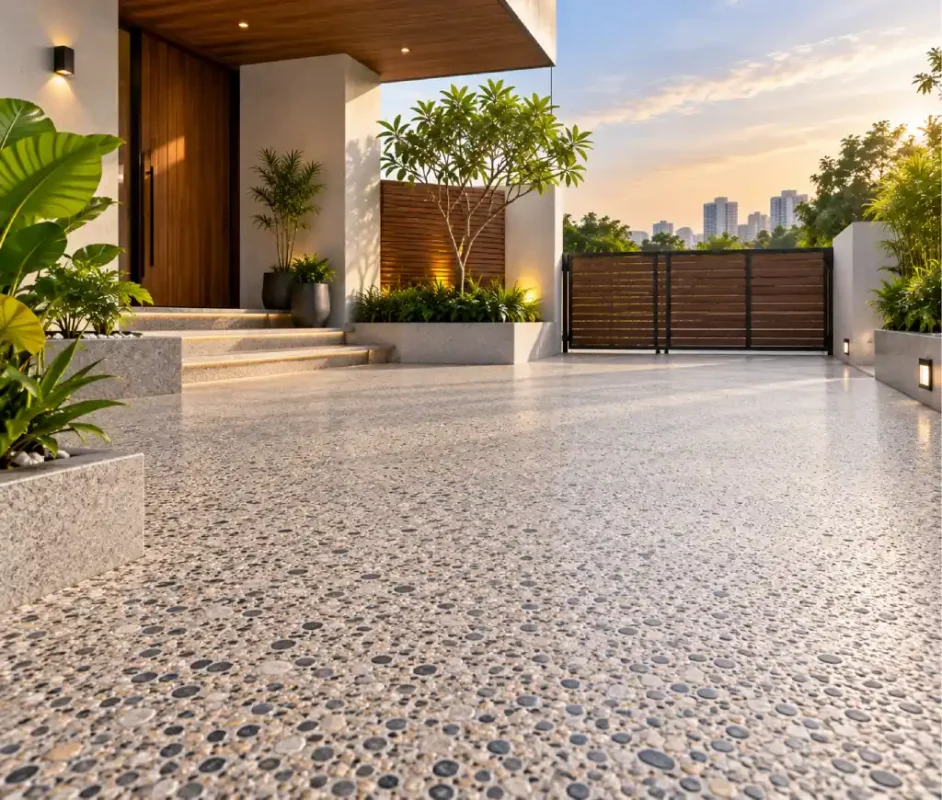
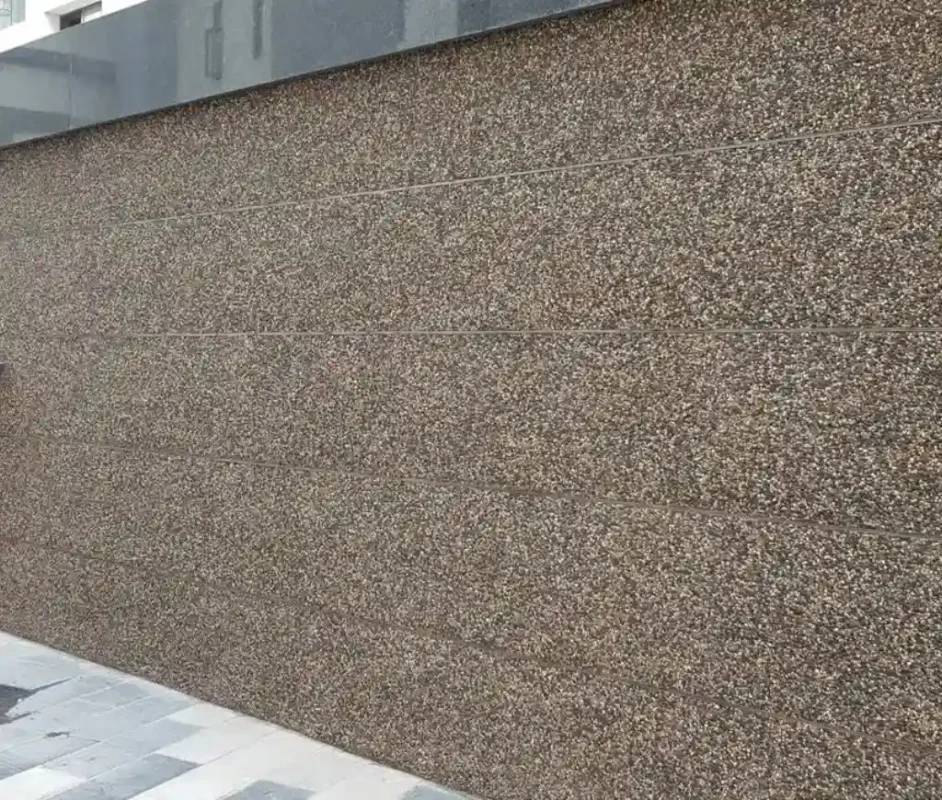
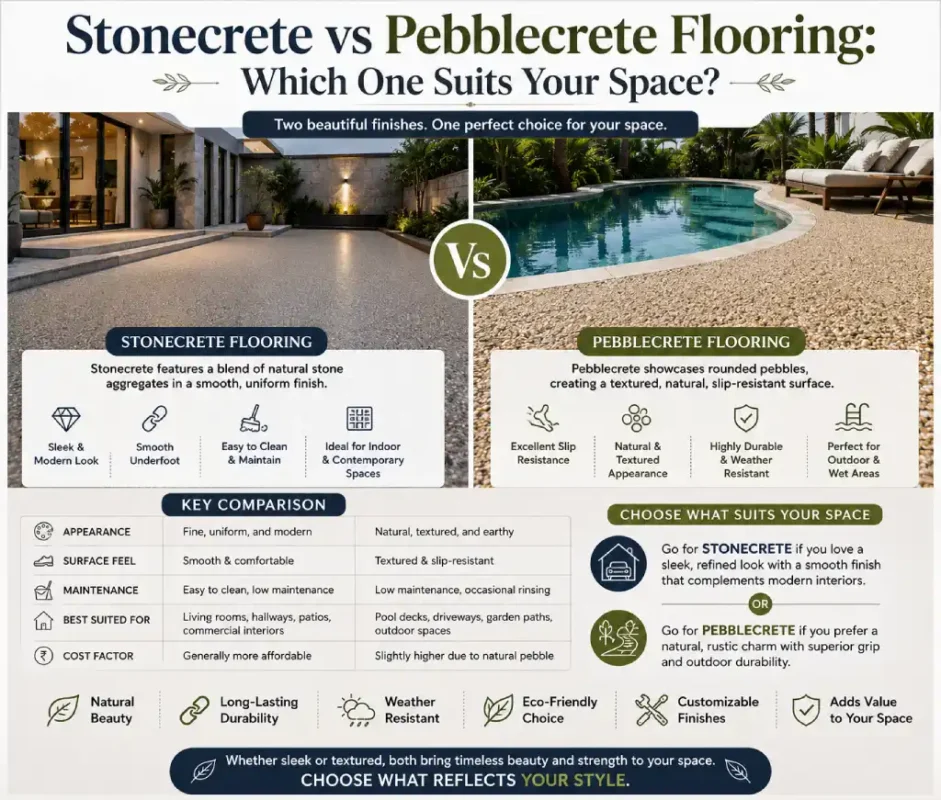
Pebblecrete is a decorative flooring finish created by incorporating small decorative stones or aggregates into a cement-based surface. The aggregate remains visible at the surface, creating a natural textured appearance.
Unlike a completely smooth concrete pathway, Pebblecrete introduces variation through the size, colour and distribution of the stones. This gives the surface a more organic character.
For gardens, this is particularly useful because the finish can visually bridge the gap between constructed surfaces and the natural landscape.
Instead of making the pathway look like an isolated concrete element, a pebble finish garden path can feel like a natural extension of the surrounding environment.
Why Pebblecrete Works So Well in Gardens
Gardens already contain a mixture of textures—grass, leaves, bark, soil, rocks and plants. A completely uniform flooring material can sometimes look disconnected from this environment.
Pebblecrete offers a different approach.
Its visible aggregate creates subtle variations in texture and colour, allowing the pathway to complement natural landscaping elements. The result can be softer and more organic than a conventional plain concrete surface.
It is also versatile enough to work with different architectural styles. A contemporary garden can use a refined aggregate finish, while a more rustic landscape can embrace a stronger natural-stone appearance.
1. Create a Curved Garden Pathway
One of the simplest ways to make a garden pathway visually interesting is to move away from perfectly straight lines.
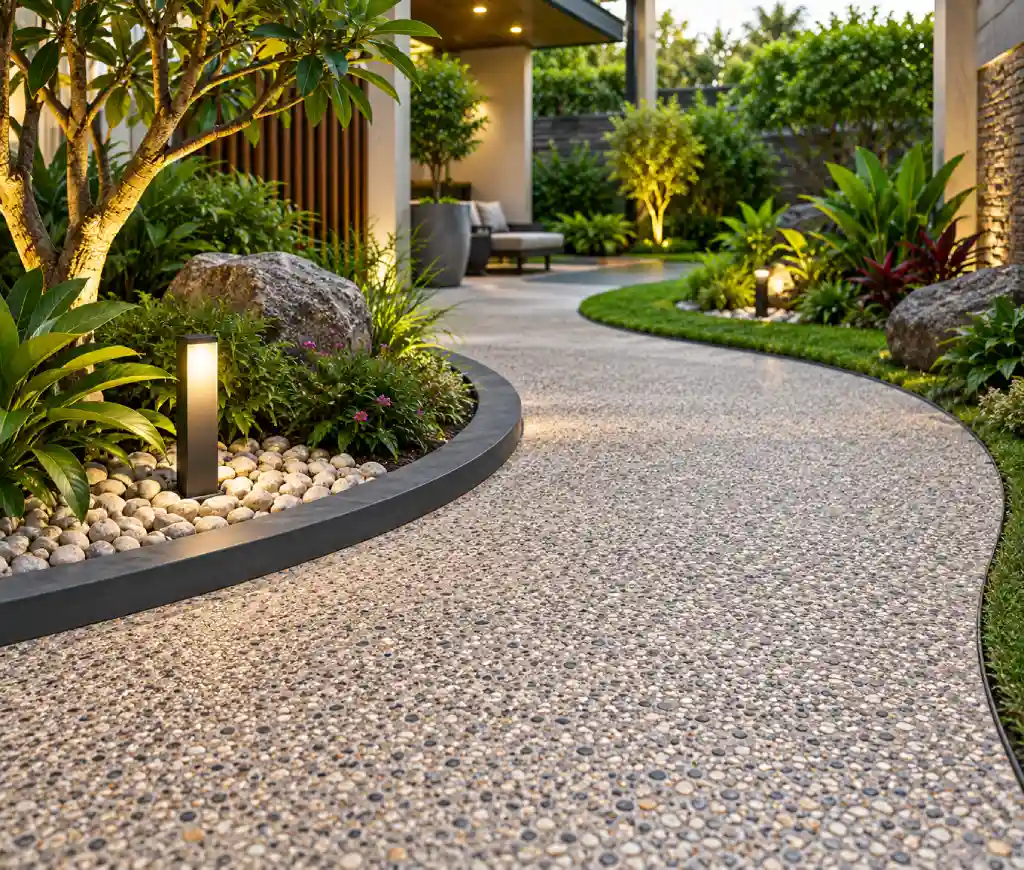
A gently curved pathway can create a sense of discovery by allowing sections of the garden to reveal themselves gradually.
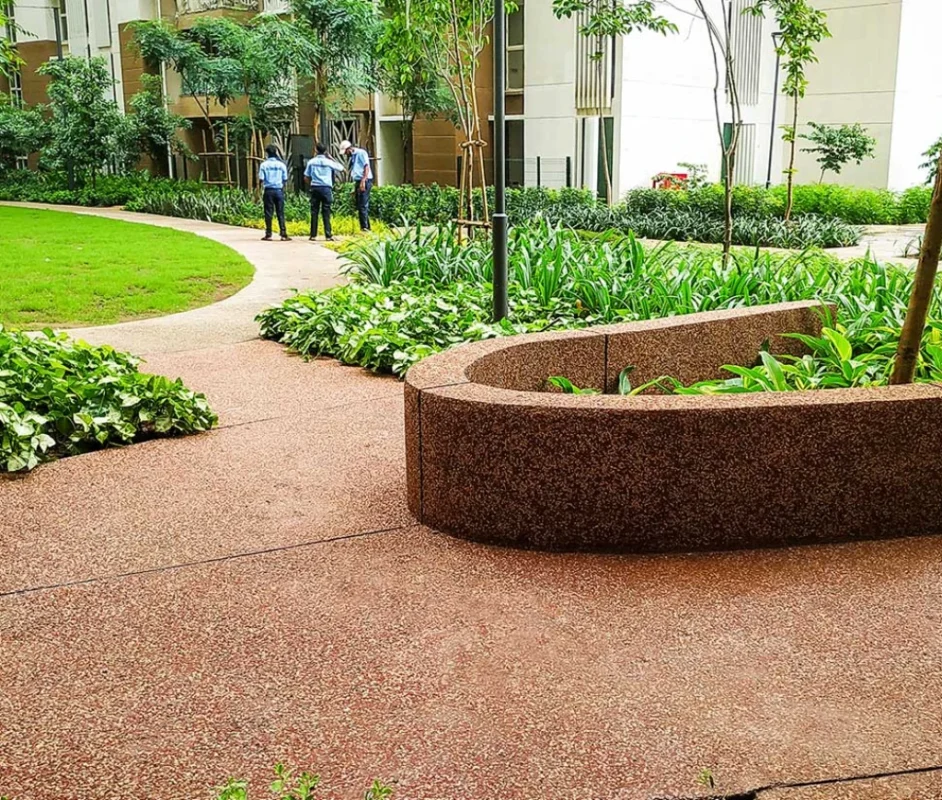
Imagine a Pebblecrete path winding between flowering plants, shrubs and small trees before leading towards a seating area or water feature.
The natural texture of the flooring complements the informal movement of the pathway, creating a landscape that feels relaxed rather than overly structured.
For larger gardens, curved paths can also help divide different zones without requiring walls or barriers.
2. Combine Pebblecrete with Greenery
Perhaps the most natural pairing is Pebblecrete and plants.
Use the pathway as a neutral, textured base while allowing greenery to frame both sides. Low-growing plants can soften the edges, while taller shrubs or ornamental grasses can create depth.
For a contemporary landscape, maintain a clean border between the Pebblecrete and lawn. For a more informal garden, allow selected plants to grow closer to the pathway edges.
This approach creates a strong connection between the flooring and landscape.
3. Use Contrasting Borders
A pathway does not necessarily need to have the same finish across its entire width.
Consider creating a central Pebblecrete surface with contrasting borders made from another outdoor material. Depending on the design, these could include natural stone, concrete edging, brick or other landscape materials.
The contrast can help define the walkway while adding a subtle design detail.
For example, a warm-toned Pebblecrete centre bordered by darker stone can create a sophisticated visual frame.
This is especially useful in contemporary gardens where clean lines are important.
4. Design Stepping Zones into the Path
Pebblecrete can also be combined with larger stepping stones.
Instead of covering the entire walkway with one continuous surface, designers can introduce individual natural-stone slabs at selected points.
The Pebblecrete becomes the textured background while the larger stones create visual rhythm.
This type of landscape walkway design works particularly well in gardens inspired by Japanese, Mediterranean or naturalistic landscaping.
The combination of small aggregate and larger stone creates multiple scales of texture without overwhelming the space.
5. Connect Different Garden Zones
A well-designed pathway should have a purpose.
Instead of simply running around the garden, use the pathway to connect meaningful areas.
For example, one Pebblecrete path could connect:
Home → Garden → Seating Area → Water Feature
or
Entrance → Lawn → Outdoor Dining → Vegetable Garden
This approach makes the pathway part of the overall landscape plan rather than treating it as an afterthought.
Pebblecrete can provide visual continuity across these zones, helping the entire garden feel connected.
6. Create a Minimalist Contemporary Path
Pebblecrete is not limited to rustic gardens.
It can also work beautifully in minimalist outdoor designs.
Use simple geometric lines, restrained planting and a carefully selected aggregate colour. Keep the surrounding landscape relatively uncluttered and allow the textured flooring to become one of the primary visual elements.
A wide rectangular Pebblecrete walkway leading towards a modern outdoor seating area can create a sophisticated contemporary look.
The key is balance. When the landscaping is simple, the texture of the flooring becomes more noticeable.
7. Frame a Garden Seating Area
If your garden includes an outdoor seating area, a Pebblecrete pathway can be used to lead visitors naturally towards it.
The pathway can widen as it approaches the seating zone, creating a subtle transition between circulation and gathering space.
For example, a narrow path might begin near the house and gradually expand into a larger Pebblecrete platform surrounding an outdoor table or bench.
This creates continuity between the walkway and seating area while giving the garden a more deliberate layout.
8. Use Pebblecrete Around Water Features
Water and stone are naturally complementary materials.
If your garden includes a fountain, pond or decorative water feature, Pebblecrete can help create a cohesive setting around it.
The textured aggregate surface can echo the appearance of natural stones surrounding the water, creating a visually connected landscape.
A Pebblecrete path leading around a small pond can also provide an interesting walking route while maintaining an earthy appearance.
For safety and practicality, the exact finish, texture and installation should be selected according to the intended use and site conditions.
9. Make a Small Garden Feel Larger
A thoughtfully designed pathway can influence how large a garden feels.
Instead of allowing the path to run directly from point A to point B, introduce gentle curves or changes in direction. This encourages people to move through the garden rather than seeing the entire space immediately.
Pebblecrete can reinforce this effect by creating a continuous visual surface.
In smaller gardens, a consistent pathway finish can also prevent the landscape from feeling fragmented by too many different materials.
10. Pair Pebblecrete with Natural Stone
If you love the appearance of natural stone but want to experiment with a different surface treatment, combining the two can produce an attractive result.
Large natural-stone slabs can act as focal points, while Pebblecrete fills the surrounding areas.
This creates a layered appearance:
Large stones = visual anchors
Pebblecrete = continuous textured surface
Plants = softness and colour
Together, these elements can create a balanced natural-stone-inspired landscape.
Choosing the Right Pebblecrete Look
The aggregate plays an important role in determining the final appearance of the pathway.
Smaller stones can create a relatively subtle texture, while larger aggregates can produce a stronger visual effect.
Colour is equally important.
Neutral beige, grey, cream and earthy tones can complement most gardens. Warmer shades can work well with Mediterranean or rustic landscapes, while cooler greys can complement contemporary architecture.
When selecting the finish, consider the colours already present in your garden, exterior walls, paving, furniture and other architectural elements.
The goal should not necessarily be to match everything perfectly. Instead, look for complementary tones.
Think About Texture, Not Just Colour
Outdoor flooring is experienced visually and physically.
The texture of a pebble finish garden path can contribute significantly to the overall character of the space.
A textured surface can add depth to an otherwise simple landscape. It can also provide visual variation when paired with smooth walls, glass, timber or metal outdoor furniture.
This is why choosing outdoor flooring should involve more than simply selecting a colour from a sample.
Consider how the finish will look:
- In direct sunlight
- In shaded areas
- Next to green plants
- During rainy conditions
- Against the exterior of the house
- Alongside other landscape materials
Looking at the complete environment will help create a more cohesive result.
Pebblecrete for Modern Pune Homes
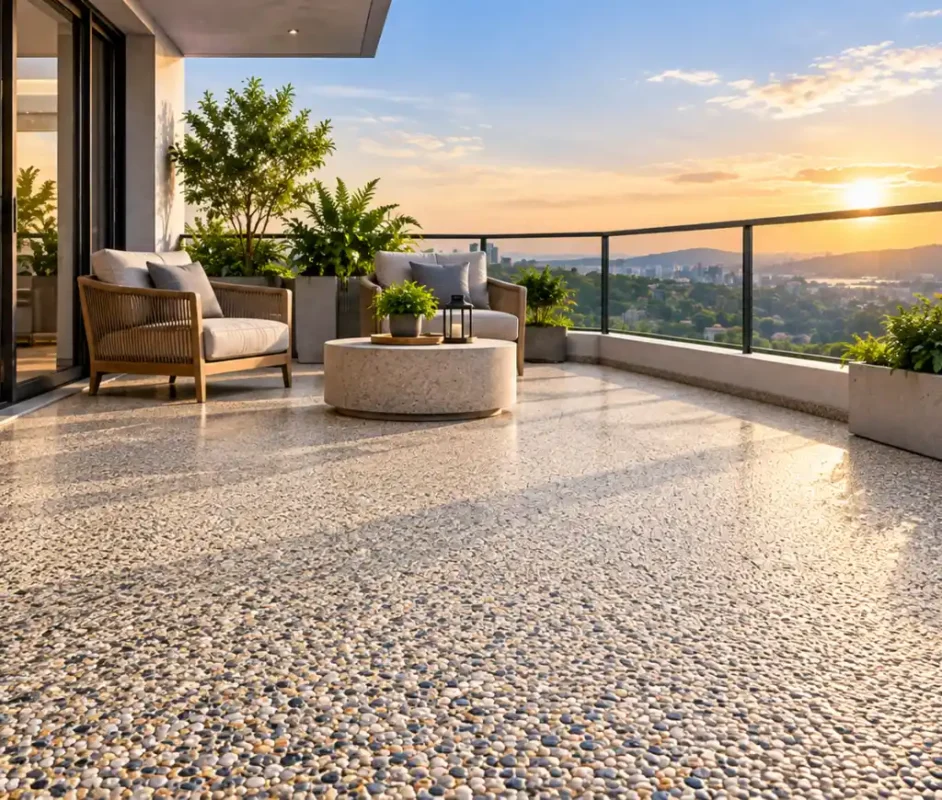
Pune’s residential architecture increasingly includes balconies, terraces, landscaped gardens, courtyards and outdoor entertainment areas.
These spaces require finishes that can complement modern architecture without looking overly industrial.
A carefully selected Pebblecrete finish can bring warmth and natural texture into these environments.
For homes with contemporary façades, a neutral Pebblecrete pathway can soften the transition between built structures and landscaping. For more traditional homes, earthy aggregate tones can complement stone, brick and natural wood.
The versatility of the material makes it suitable for different design directions.
Maintenance and Installation Matter
A beautiful pathway begins with good design, but long-term performance depends heavily on proper preparation and installation.
The substrate, drainage, slope, aggregate selection, surface preparation and finishing technique should all be considered before installation.
Outdoor pathways are exposed to rain, sunlight, dirt and regular foot traffic, so the flooring system should be selected according to the specific location and expected use.
Proper drainage is especially important in landscaped areas. Water should not be allowed to remain on the pathway or collect along its edges.
Professional installation can help ensure that the finished surface performs as intended while achieving the desired aesthetic.
Don’t Make the Pathway an Afterthought
One common landscaping mistake is designing the garden first and adding pathways later.
A better approach is to think about circulation from the beginning.
Ask:
Where will people enter the garden?
Which areas should they naturally move towards?
Where will they sit, relax or entertain?
Which plants or landscape features should become focal points?
Once these questions are answered, the pathway can be designed to support the overall experience.
Pebblecrete then becomes more than just a flooring material—it becomes part of the garden’s visual language.
Why Pebblecrete Is More Than Just a Flooring Finish
The strongest pebblecrete garden pathway ideas are not necessarily the most complicated ones.
Sometimes, a simple curved pathway surrounded by greenery can create more impact than an elaborate design filled with different materials.
The strength of Pebblecrete lies in its ability to add texture without competing excessively with the landscape.
It can create a grounded, natural appearance while still providing a defined walking surface.
Whether used for a compact courtyard, a villa garden, an outdoor café landscape or a larger landscaped property, the finish can be adapted to suit the character of the space.
Bring Natural Texture into Your Landscape with Instakrete
At Instakrete, decorative surface finishes are designed to help architects, designers, homeowners and businesses move beyond ordinary flooring and wall treatments.
Pebblecrete offers an opportunity to introduce the visual character of natural stone into garden pathways while creating a durable and distinctive outdoor surface.
From winding garden walkways and minimalist pathways to seating zones, water features and landscaped courtyards, the possibilities are extensive.
The right pathway can transform the way a garden looks and feels.
So, instead of treating your garden walkway as simply a route from one place to another, consider making it part of the design itself.
Choose texture. Create movement. Connect the landscape. Let your pathway become part of the garden’s story.