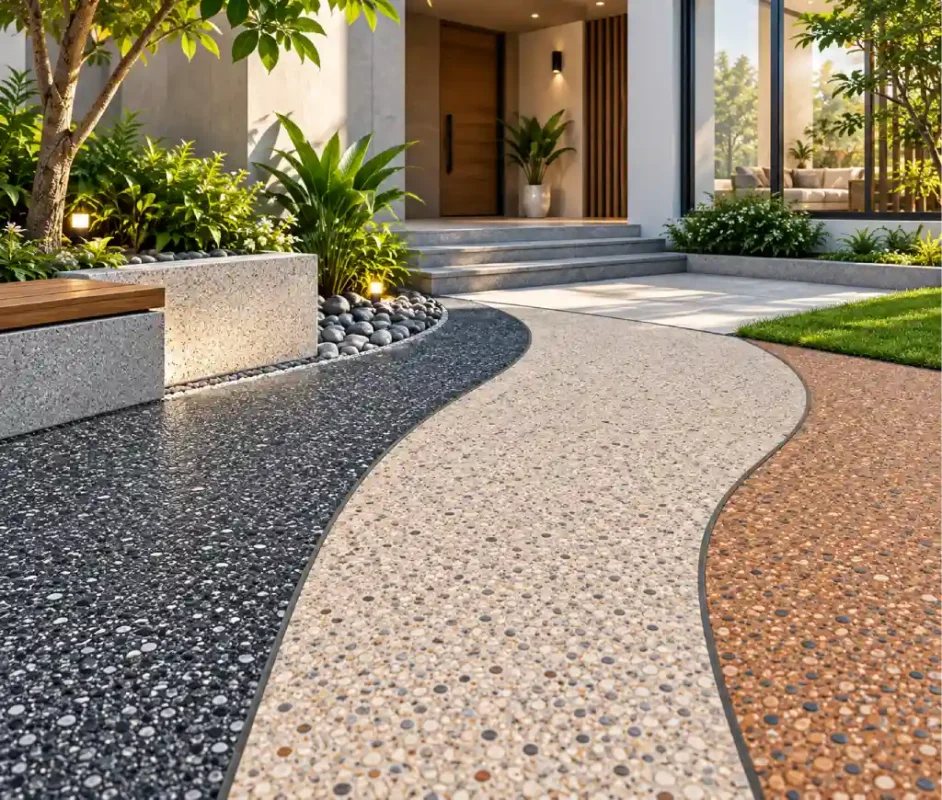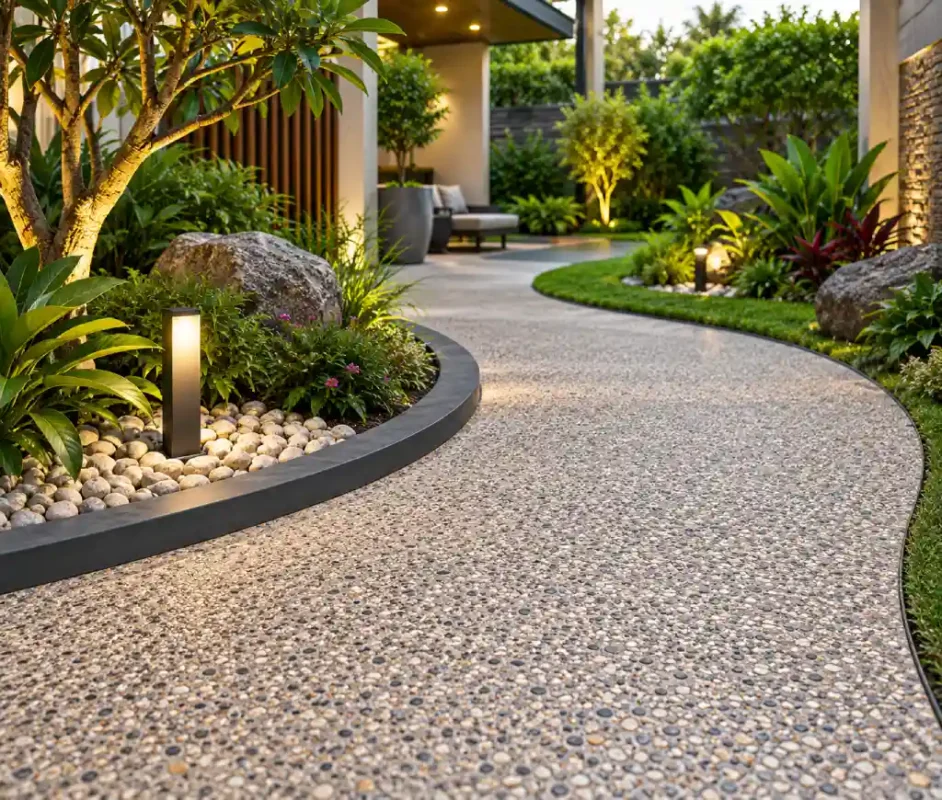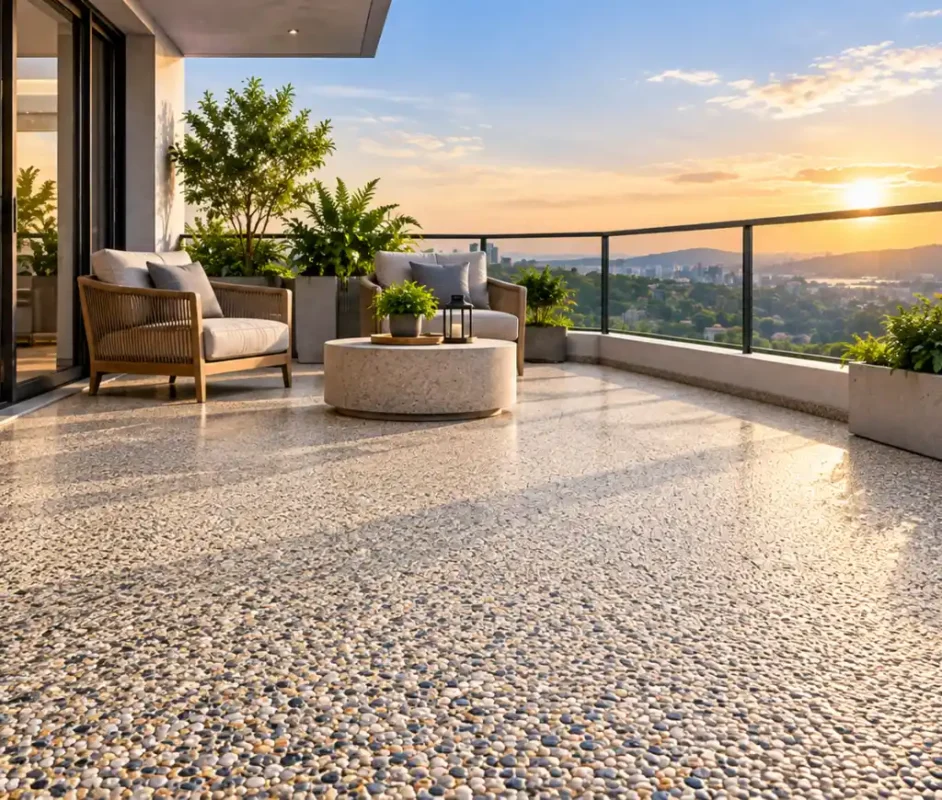

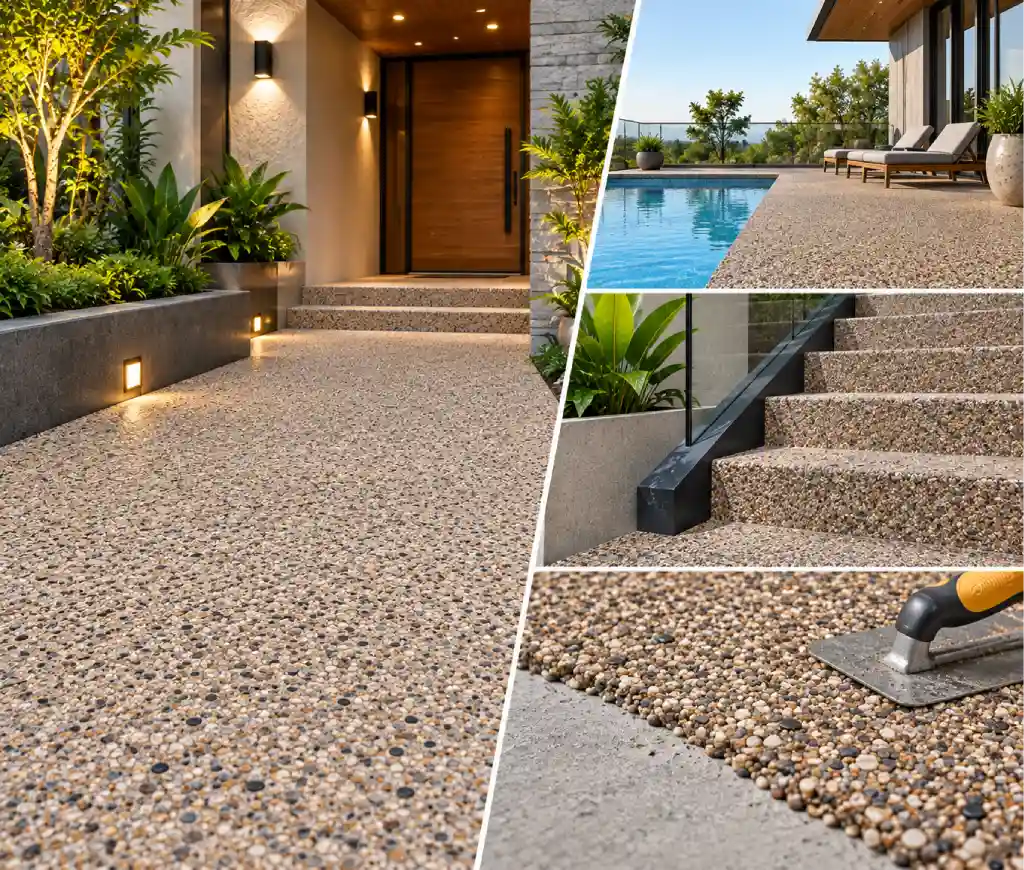
Outdoor flooring needs to do more than look attractive. It must handle sunlight, rain, foot traffic, dirt, temperature changes and, in many cases, vehicles. This is why homeowners, architects and landscape designers are increasingly exploring alternatives to conventional tiles, concrete and pavers.
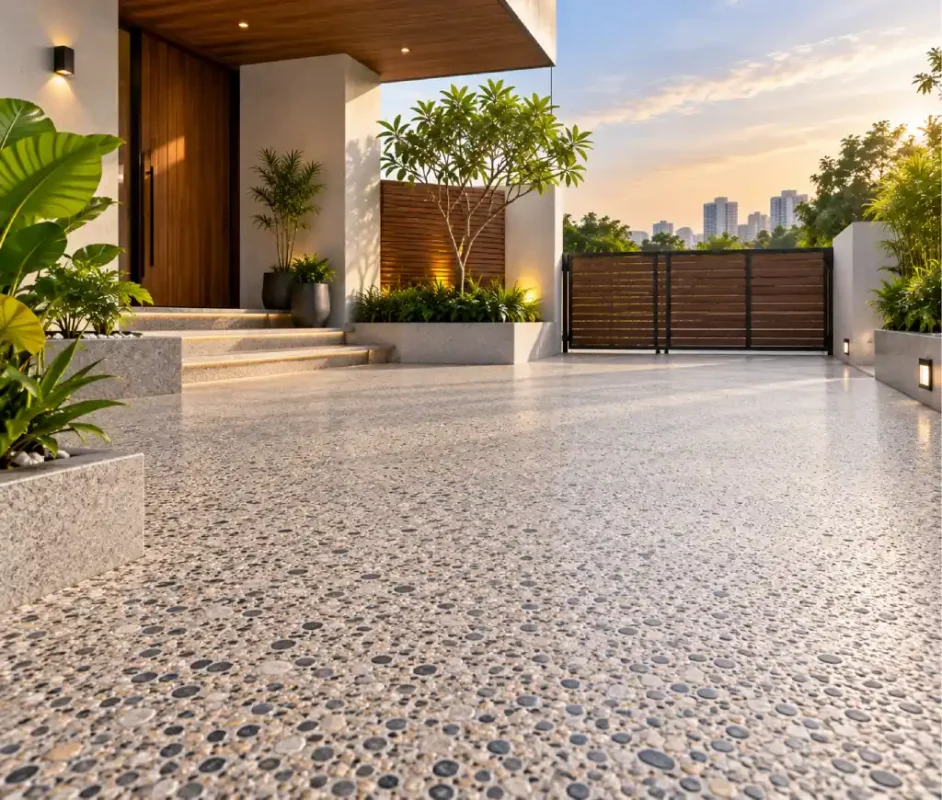
Stone carpet flooring is one such option. Made by combining selected natural stone aggregates with a durable resin binder, it creates a textured, decorative and continuous surface that can work particularly well across landscaped and outdoor areas.
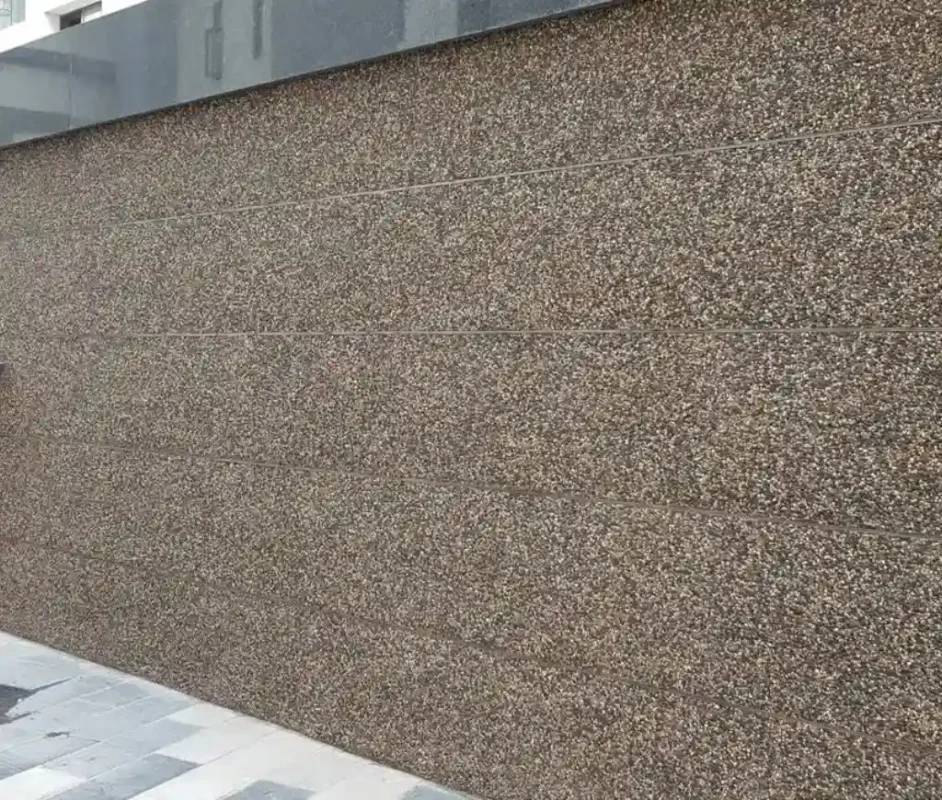
Also known as resin bound stone flooring, this system combines the natural appearance of stone with the bonding performance of resin. Depending on the aggregate, colour and finish selected, it can create anything from a subtle contemporary surface to a more natural pebble-style appearance.
But where does stone carpet work best? How is it installed? And what determines the stone carpet cost?
Let’s explore everything homeowners and designers should know before choosing this flooring system.
What Is Stone Carpet Flooring?
Stone carpet flooring is a decorative surface created by combining natural stone aggregates with a resin binder. The aggregate is mixed with resin and then applied to a properly prepared base to create a continuous surface.
InstaKrete describes its Stone Carpet as a flooring solution that combines natural stones with durable resin, offering different stone types and colours along with durability, low maintenance and a slip-resistant finish.
Unlike conventional tiles, the surface does not depend on individual pieces and conventional grout joints. Instead, the aggregate creates a textured appearance across the floor.
The final appearance depends on several factors, including the aggregate grading, stone colour, aggregate size, resin system, application technique and selected finish.
Stone Carpet vs Pebble Resin Flooring
The terms used for decorative aggregate flooring can sometimes be confusing. Stone carpet, resin-bound stone flooring and pebble resin flooring may refer to related systems, but the exact composition and installation method can vary between products.
Stone carpet generally focuses on combining decorative aggregates with resin to create a continuous architectural surface. The aggregates can include natural stone, marble or other carefully selected materials.
The choice of aggregate significantly influences the appearance. Smaller aggregates can produce a finer texture, while larger stones create a more pronounced natural-stone appearance.
For Indian residential and landscape projects, the important consideration is not simply the name of the flooring but the complete system: aggregate + resin binder + base + installation method + protective finish.
Where Does Stone Carpet Flooring Work Best?
One of the biggest advantages of stone carpet is its versatility.
Driveways
A properly designed stone carpet system can be considered for residential driveways where appearance is as important as everyday functionality. Resin-bound aggregate flooring has also been used for driveway applications because the bonded aggregate creates a stable, textured surface. InstaKrete highlights resin-bound flooring as a potential alternative to conventional concrete and pavers for driveways.
For driveways, however, the base construction, aggregate selection, resin specification and expected vehicle load should be evaluated before installation.
Pool Decks
Poolside areas need flooring that provides traction while complementing the surrounding landscape.
The textured character of aggregate flooring can provide an anti-slip surface when an appropriate aggregate and finish are selected. This makes stone-based decorative flooring worth considering for pool decks, pathways and recreational landscapes.
The final slip performance depends on the complete flooring system and should be confirmed for the specific project.
Garden Paths and Walkways
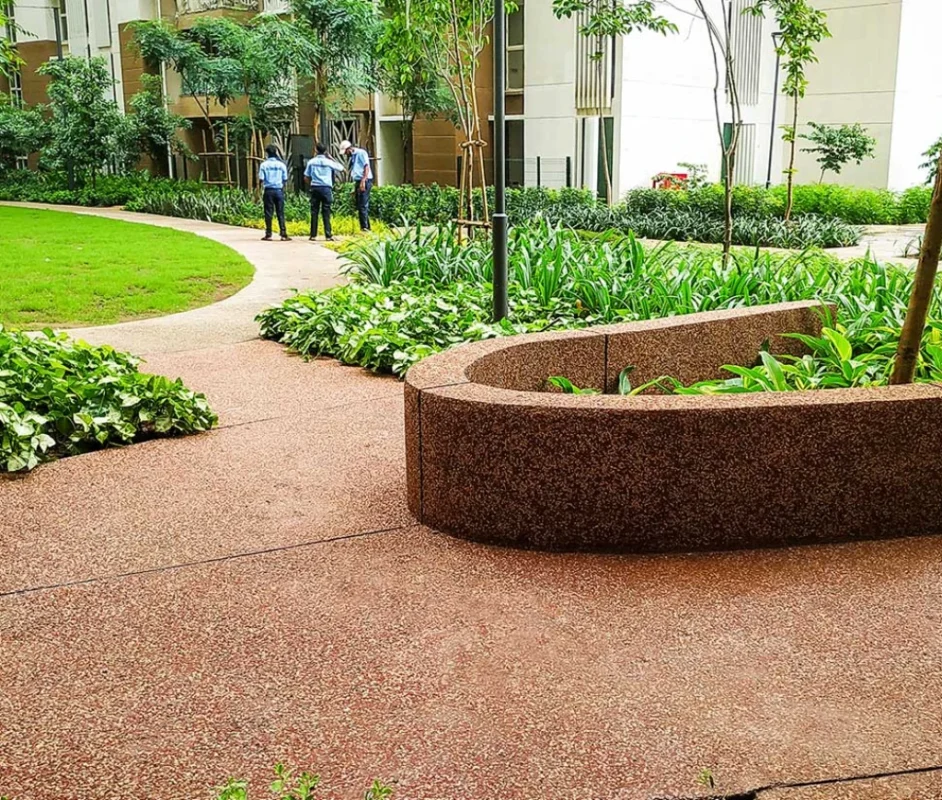
Stone carpet can create a natural transition between lawns, planting areas, patios and other landscape elements.
Its stone-rich appearance works particularly well when the objective is to create an outdoor environment that feels connected to the surrounding landscape rather than looking like a conventional tiled floor.
Patios and Outdoor Seating Areas
For patios, terraces and outdoor seating spaces, stone carpet provides both decorative texture and a continuous appearance.
It can be used to visually define outdoor zones while maintaining a consistent material language across pathways and landscape features.
Commercial Landscapes
Hotels, resorts, restaurants, offices and other commercial properties often require outdoor surfaces that combine durability with visual appeal.
Stone carpet can be considered for selected pedestrian landscape areas, entrances, courtyards and feature zones where a natural aggregate appearance is desired.
Is Stone Carpet Flooring Permeable?
One of the important technical considerations with resin-bound flooring is drainage.
In a properly designed resin-bound system, the spaces between the individual aggregate particles can allow water to pass through the surface. This can create a permeable surface and help reduce surface water accumulation when the underlying base and drainage design are also suitable.
However, permeability should not be assumed simply because a floor uses stone and resin. Aggregate grading, resin content, installation technique and the underlying construction all influence drainage performance.
For outdoor projects, the complete drainage strategy should therefore be planned alongside the flooring.
How Is Stone Carpet Flooring Laid?
Professional installation is important because the quality of the finished surface depends heavily on preparation and application.
Step 1: Assess and Prepare the Base
The existing base must be stable, clean and suitable for the proposed flooring system.
Any structural problems, loose material, cracks or drainage issues should be addressed before installation. The base may require cleaning, levelling or other preparation depending on its existing condition.
Step 2: Select the Aggregate
The aggregate is an important part of the final appearance and performance.
Natural stone, marble aggregate and other decorative aggregates can be selected according to the desired colour, texture and application.
Aggregate grading also matters. The size distribution of the stone particles affects the appearance, texture, resin requirement and potential drainage characteristics of the finished surface.
Step 3: Mix the Stone and Resin
The selected aggregate is thoroughly combined with the specified resin binder.
For outdoor applications, the resin system should be selected according to the project’s exposure conditions. A UV-stable resin binder is particularly important where the flooring will receive prolonged sunlight.
Proper mixing is essential to ensure that the aggregate is consistently coated and the resin is evenly distributed.
Step 4: Trowel Application
The resin-bound aggregate mixture is placed over the prepared base and compacted and finished using specialist tools.
A trowel-laid application helps create an even, continuous surface while maintaining the intended aggregate texture.
The installer must control thickness and compaction carefully to achieve a consistent appearance across the project.
Step 5: Curing
After installation, the flooring requires adequate curing time before it is exposed to regular traffic.
The exact curing period depends on the resin system, weather conditions, temperature and project specifications.
Step 6: Sealer Topcoat, Where Specified
Depending on the selected system and application, a sealer topcoat may be used to provide additional protection and influence the final appearance.
The suitability of a topcoat depends on the resin and aggregate system, so it should be specified as part of the overall flooring design rather than treated as a universal requirement.
What Determines Stone Carpet Cost?
There is no single price for stone carpet flooring because every project can have different material and installation requirements.
The final stone carpet cost can depend on:
Aggregate selection: Premium natural stones or marble aggregates can cost more than standard aggregate options.
Aggregate size and grading: Different stone sizes and combinations can change material requirements and installation characteristics.
Resin system: The type and performance specifications of the resin binder influence the overall cost, particularly for exterior applications where UV stability and weather resistance are important.
Base preparation: A sound, level base generally requires less corrective work than a damaged or uneven surface.
Project size: Larger projects may have different material and labour economics compared with small installations.
Design complexity: Patterns, borders, colour combinations and intricate detailing can increase installation time.
Location and access: Site accessibility, transportation and project conditions can influence labour and logistics.
Protective finishing: Additional sealing or protective treatments can affect the final project cost.
Therefore, comparing stone carpet only on a per-square-foot material rate can be misleading. A more useful quotation should include material, aggregate, resin, surface preparation, application, finishing and other site-specific requirements.
Stone Carpet Flooring vs Conventional Pavers
Pavers are popular for driveways, gardens and outdoor walkways because they are familiar and available in numerous designs.
However, paver systems contain individual units and joints. Over time, movement, settlement, weed growth or joint maintenance can become considerations.
Stone carpet creates a more continuous appearance because the aggregate is bonded together with resin. This gives it a visually different character from modular pavers.
The choice depends on the project requirements, including expected traffic, drainage, maintenance preferences, design goals and base construction.
Stone Carpet Flooring vs Tiles
Outdoor tiles provide a large variety of colours, patterns and finishes. However, tiled surfaces contain joints, and their performance depends on correct substrate preparation and installation.
Stone carpet offers a more natural aggregate appearance and a seamless, joint-free visual effect. It can also integrate more naturally into landscaped environments.
For homeowners who want an outdoor surface that feels closer to natural stone than conventional ceramic or vitrified flooring, stone carpet can be an interesting alternative.
What About Maintenance?
Stone carpet is designed to be relatively easy to maintain, but outdoor surfaces still require regular cleaning.
Dust, leaves, mud, food spills and other contaminants should be removed periodically. Areas exposed to vehicles may also require attention to oil or chemical spills.
Routine maintenance can include sweeping, washing and inspection of the surface for any signs of damage or wear.
InstaKrete describes Stone Carpet as durable and easy to maintain, making maintenance requirements an important part of its appeal for landscape applications.
Is Stone Carpet Suitable for Indian Weather?
Indian outdoor flooring can be exposed to intense sunlight, monsoon rainfall, humidity, dust and significant temperature changes.
For this reason, the complete flooring specification matters. Exterior projects should use a resin system appropriate for outdoor exposure, with attention given to UV stability, drainage, substrate movement and aggregate selection.
A UV-stable resin binder can be particularly relevant for areas exposed to strong sunlight. Similarly, appropriate base preparation is essential because movement or instability below a thin decorative surface can affect its long-term performance.
Final Thoughts
Stone carpet flooring offers a distinctive alternative to conventional outdoor tiles, pavers and plain concrete. By combining natural aggregate with resin, it creates a decorative, textured and continuous surface that can complement contemporary homes, landscaped gardens and commercial outdoor spaces.
Its suitability for driveways, pool decks, pathways, patios and other applications depends on the project’s structural requirements, drainage strategy, expected traffic and exposure conditions.
If you’re considering stone carpet, don’t evaluate it only by its appearance or advertised price per square foot. Ask about the aggregate grading, resin binder, UV stability, base preparation, installation thickness, drainage design and finishing system.
At InstaKrete, decorative landscape surfaces are part of the company’s range of architectural and landscaping finishes, including Stone Carpet, Stonecrete and Pebblecrete solutions.
A properly specified and professionally installed stone carpet system can bring together the natural character of stone with the clean, continuous appearance expected from a modern outdoor flooring solution.