
Choosing the right plaster is an important part of creating walls that look good and perform well over time. While gypsum plaster has become common in modern construction, lime plaster is gaining attention among homeowners and designers looking for natural, breathable and character-rich surfaces.
So, when comparing lime plaster vs gypsum plaster, which one should you choose for your home?
The answer depends on where the plaster will be used, the moisture conditions, the desired finish, maintenance expectations and the overall design of the space.
What Is Lime Plaster?
Lime plaster is a traditional plastering material made using lime, aggregates and water. It has been used for centuries in different forms of architecture and remains relevant in contemporary interiors because of its natural appearance and breathable characteristics.
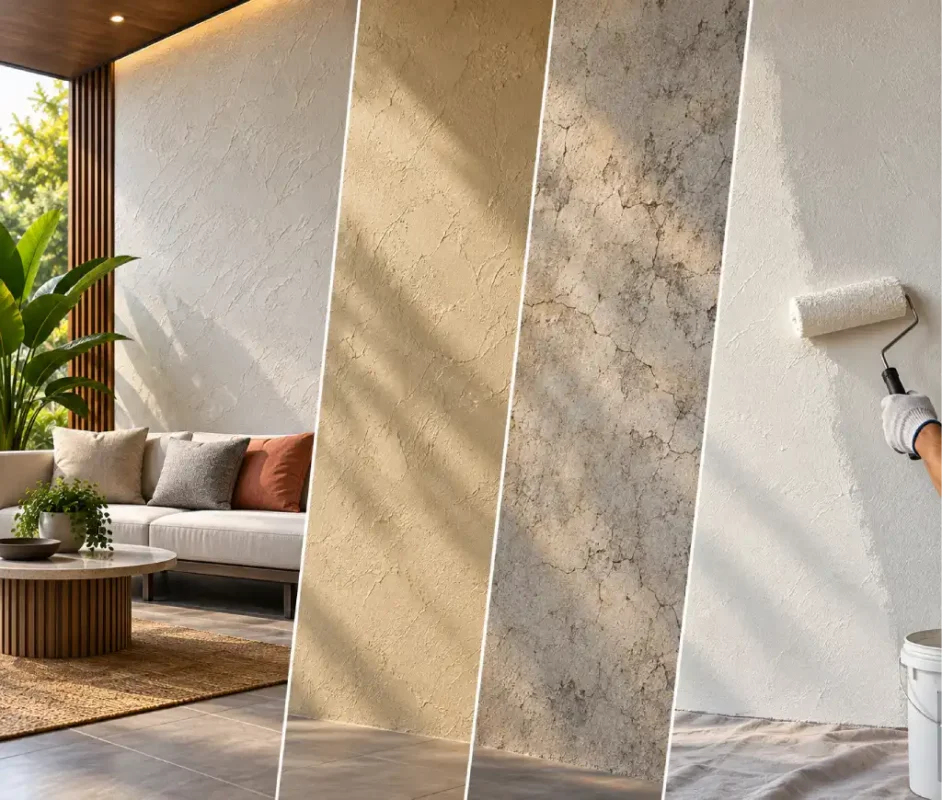
Modern lime-based finishes can provide soft, matte surfaces with subtle variations that work well with natural, minimalist and rustic interiors.
At InstaKrete, lime plaster is positioned as a natural and breathable decorative finish suitable for both traditional and contemporary spaces.
What Is Gypsum Plaster?
Gypsum plaster is a modern internal plastering material made primarily from gypsum. It is widely used for interior walls and ceilings because it is relatively easy to apply and can create a smooth surface ready for painting or other decorative treatments.
It is particularly common in residential and commercial interiors where speed, smoothness and a consistent finish are priorities.
However, gypsum plaster is generally intended for dry interior environments and needs to be selected carefully for areas with significant moisture exposure.
Lime Plaster vs Gypsum Plaster: Key Differences
1. Breathability
One of the biggest differences is how the two materials interact with moisture vapour.
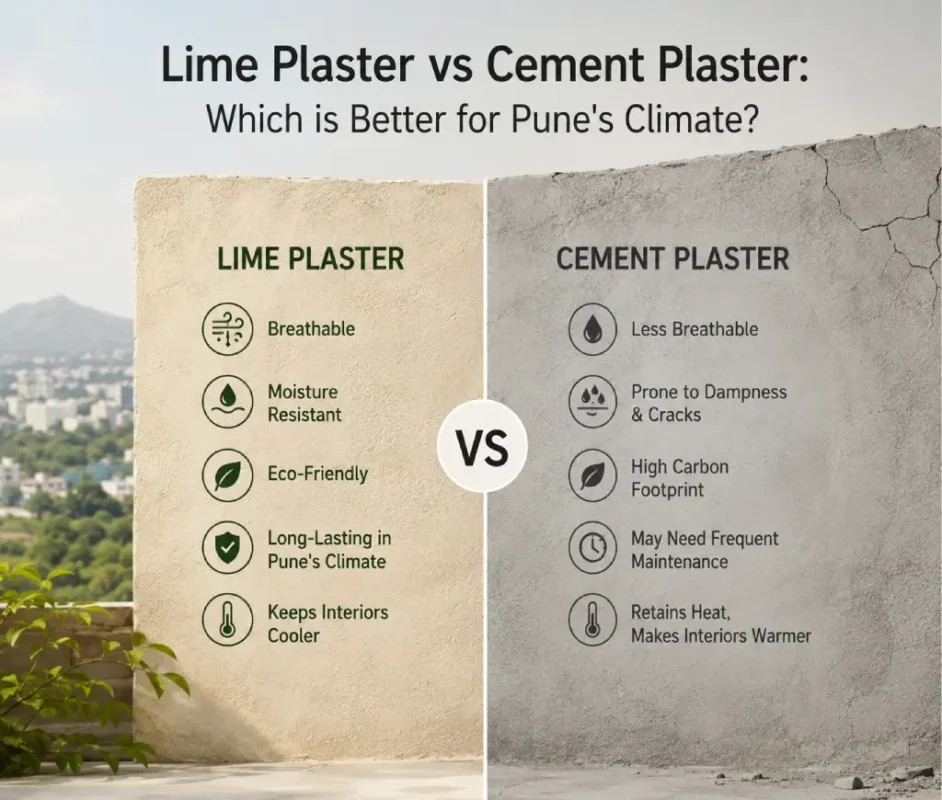
Lime plaster is known for its vapour permeability, allowing walls to exchange moisture rather than creating a completely sealed surface. This is one reason breathable walls are often associated with lime-based systems.
Gypsum can also have useful moisture-regulating properties under appropriate conditions, but it is generally not the first choice for areas exposed to persistent dampness or direct water.
2. Moisture Handling
Lime plaster is often considered for buildings where moisture movement through the wall needs to be accommodated. However, “water-resistant” and “breathable” are not the same thing. Lime plaster should not be treated as a waterproofing solution.
Gypsum plaster is better suited to dry internal spaces. Persistent moisture, water seepage or prolonged exposure can affect gypsum-based materials and their performance.
For kitchens, bathrooms or damp-prone areas, the complete wall system—including substrate, waterproofing, plaster and final coating—should be considered rather than choosing a plaster in isolation.
3. Finish and Appearance
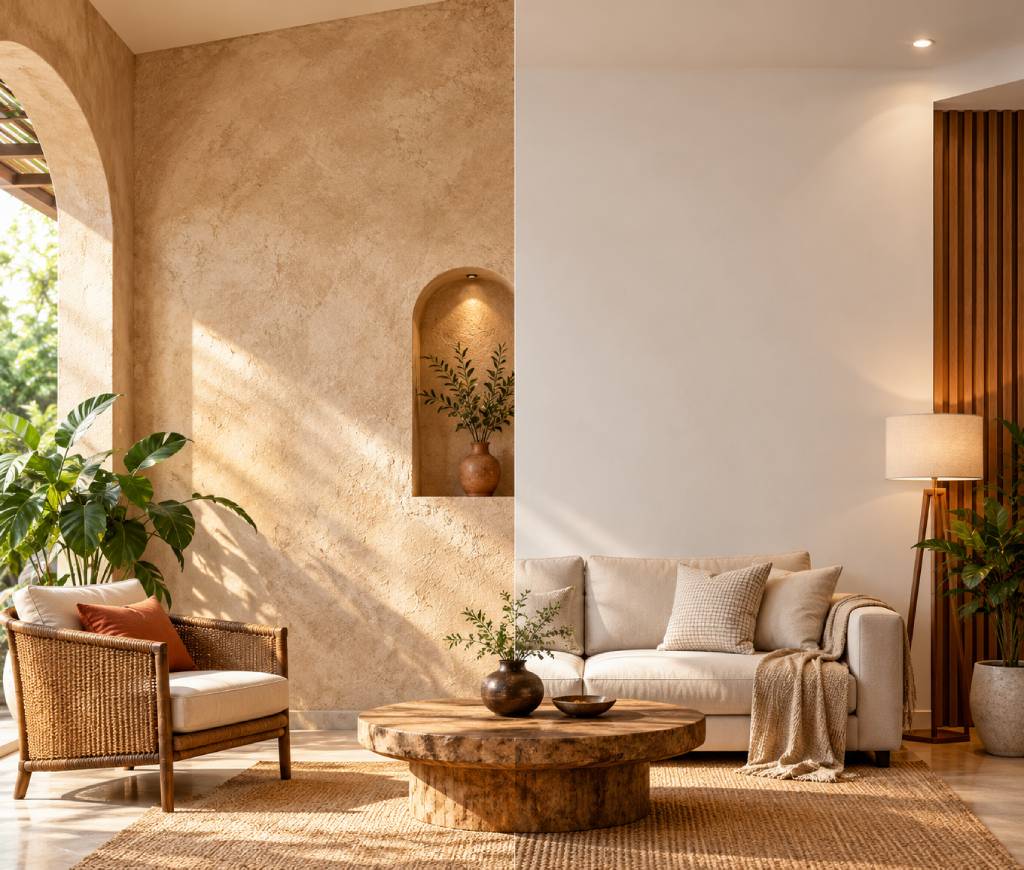
Gypsum plaster is commonly selected when the goal is a smooth, uniform surface. It provides a practical base for paint and other interior finishes.
Lime plaster offers a different aesthetic. Depending on the formulation and application, it can create subtle texture, tonal variation and a softer handcrafted appearance.
This makes lime particularly attractive for homeowners who want natural wall finishes rather than perfectly uniform surfaces.
4. Durability
The durability of either system depends on the substrate, formulation, application quality, environmental conditions and maintenance.
Gypsum can perform effectively for many years in suitable dry interior applications. Lime plaster can also be highly durable when correctly formulated and applied, particularly in environments where its breathability is beneficial.
Poor surface preparation, movement, dampness and inappropriate application can affect either system.
5. Environmental Considerations
Lime is often considered an eco-friendly plaster option because of its traditional material characteristics and vapour-permeable nature. Its suitability can be particularly relevant for projects focused on natural materials and lower-impact design approaches.
Gypsum is also widely used because of its availability, ease of application and predictable finish. Environmental performance, however, depends on the complete product lifecycle, manufacturing process, transportation and disposal—not simply the name of the plaster.
6. Application and Skill
Gypsum plaster is widely used by modern construction teams and is generally straightforward to apply when the substrate and conditions are appropriate.
Lime plaster can require greater understanding of the material, substrate and curing process, especially when a decorative or traditional appearance is desired.
For premium decorative lime finishes, workmanship can have a significant impact on the final appearance.
POP vs Lime Plaster: Are They the Same?
No. POP, or Plaster of Paris, and gypsum plaster are related to gypsum-based materials but are not automatically identical in formulation or application.
POP is commonly used for decorative mouldings, false-ceiling details and certain interior applications. Lime plaster, meanwhile, is a different material system with different characteristics.
If your priority is breathable, natural-looking walls, comparing POP only on surface smoothness will not provide the full picture.
What About Gypsum Plaster Disadvantages?
Gypsum plaster has many practical advantages, but it also has limitations.
Its suitability decreases in environments with persistent moisture or direct water exposure. It may also be less appropriate where the design calls for a strongly textured, naturally varied or traditional surface.
These aren’t reasons to avoid gypsum altogether. They simply mean the material should be matched to the application.
Which Plaster Is Better for Indian Homes?
There is no universal winner.
Gypsum plaster can be a practical choice for dry internal areas where a smooth, consistent surface and efficient application are priorities.
Lime plaster may be more suitable when breathability, natural aesthetics, traditional character or moisture-vapour management are important considerations.
For a modern apartment bedroom, gypsum may provide the straightforward smooth finish required. For a farmhouse, heritage-inspired residence, natural-material interior or feature wall, lime plaster may better complement the design intent.
How to Choose the Right Internal Plaster Type
Before making a decision, consider:
Location: Is it a dry bedroom or a moisture-prone area?
Finish: Do you want a perfectly smooth painted surface or a natural textured appearance?
Wall condition: Does the existing substrate have dampness, cracks or other issues?
Design: Will the plaster remain visible, or will it simply act as a base for paint?
Maintenance: What cleaning and maintenance will the finished surface require?
Application: Is the contractor experienced with the selected material?
These factors can be more important than choosing a material simply because it is more popular.
Final Thoughts
The lime plaster vs gypsum plaster debate is less about finding one universally superior material and more about selecting the right system for the right space.
Gypsum offers a smooth and practical solution for many dry interior applications, while lime plaster brings breathability, natural character and a distinctive visual quality to suitable projects.
At InstaKrete, lime-based finishes can be explored for homeowners looking beyond conventional plaster and paint. Before selecting any plaster system, consider the wall condition, moisture exposure, desired finish and long-term use of the space.