
Introduction
Choosing the right outdoor flooring involves more than selecting an attractive finish. Drainage, surface grip, durability and maintenance all influence how well a surface performs over time. Two popular options are resin bound flooring and resin bonded surfacing. Although their names sound similar, their installation methods and performance are quite different.
Understanding these differences can help homeowners, architects and landscape designers select the right resin driveway alternative for pathways, patios, balconies and other outdoor spaces.
What Is Resin Bound Flooring?
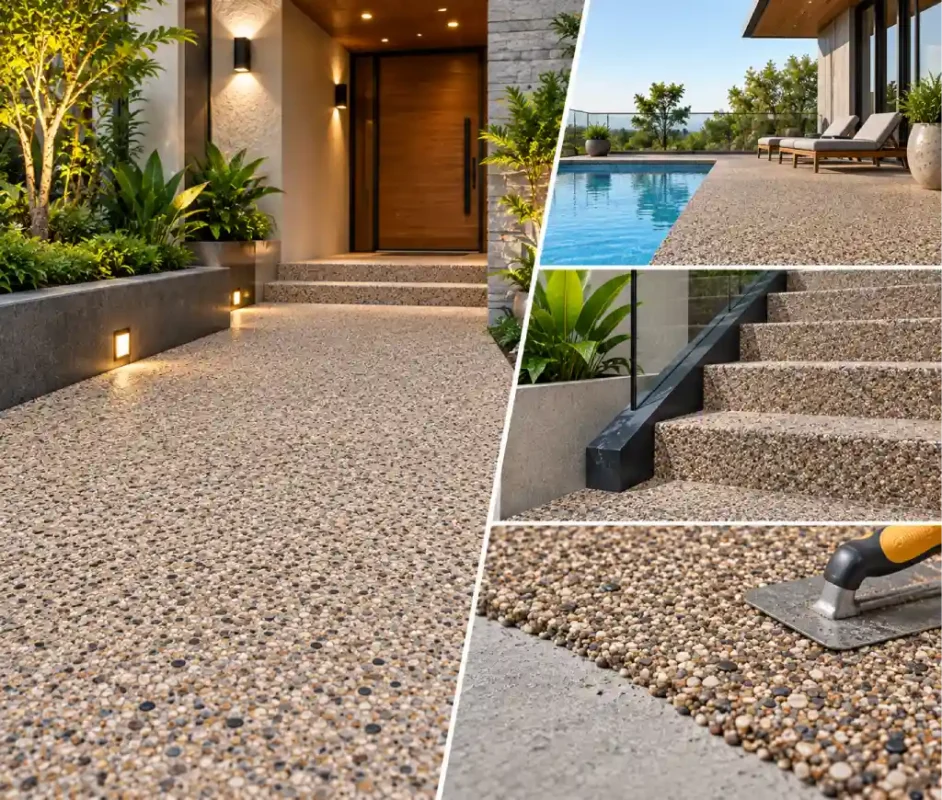
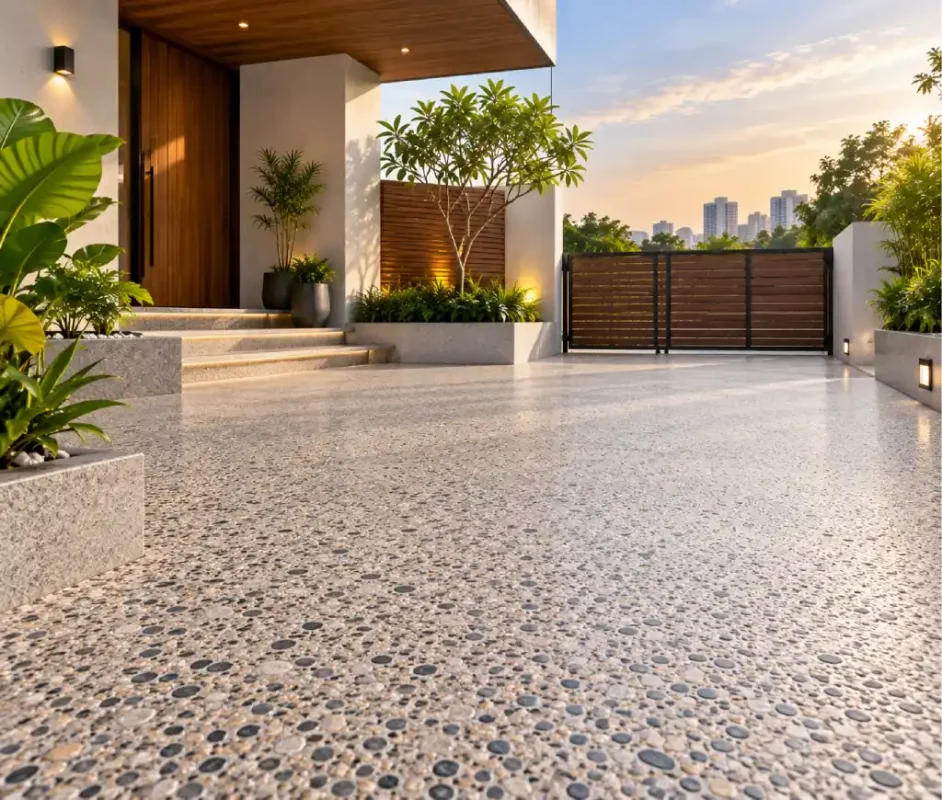
Resin bound flooring is created by mixing natural aggregates, such as crushed stone or decorative gravel, with a clear resin before applying the mixture to a prepared base. The material is then spread and levelled to create a smooth, seamless finish.
Since the aggregate is completely coated and held together by resin, the finished surface has minimal loose stones. Its porous structure allows rainwater to pass through when installed over a suitably permeable base.
Resin bound aggregate is suitable for driveways, garden pathways, patios, terraces and landscaped outdoor areas. It combines decorative appeal with practical drainage benefits.
What Is Resin Bonded Surfacing?
Resin bonded surfacing follows a different installation process. Instead of mixing the aggregate with resin, a layer of resin is first applied to the prepared surface. Decorative stones are then scattered over the wet resin and allowed to bond.
This creates a rougher, textured appearance similar to traditional gravel. However, the surface is generally non-permeable because the underlying resin layer prevents water from draining through it. Some loose aggregate may also remain.
Resin bonded surfacing is useful where a more pronounced stone texture and additional surface grip are desired, provided appropriate drainage is planned.
Resin Bound vs Resin Bonded: Key Differences
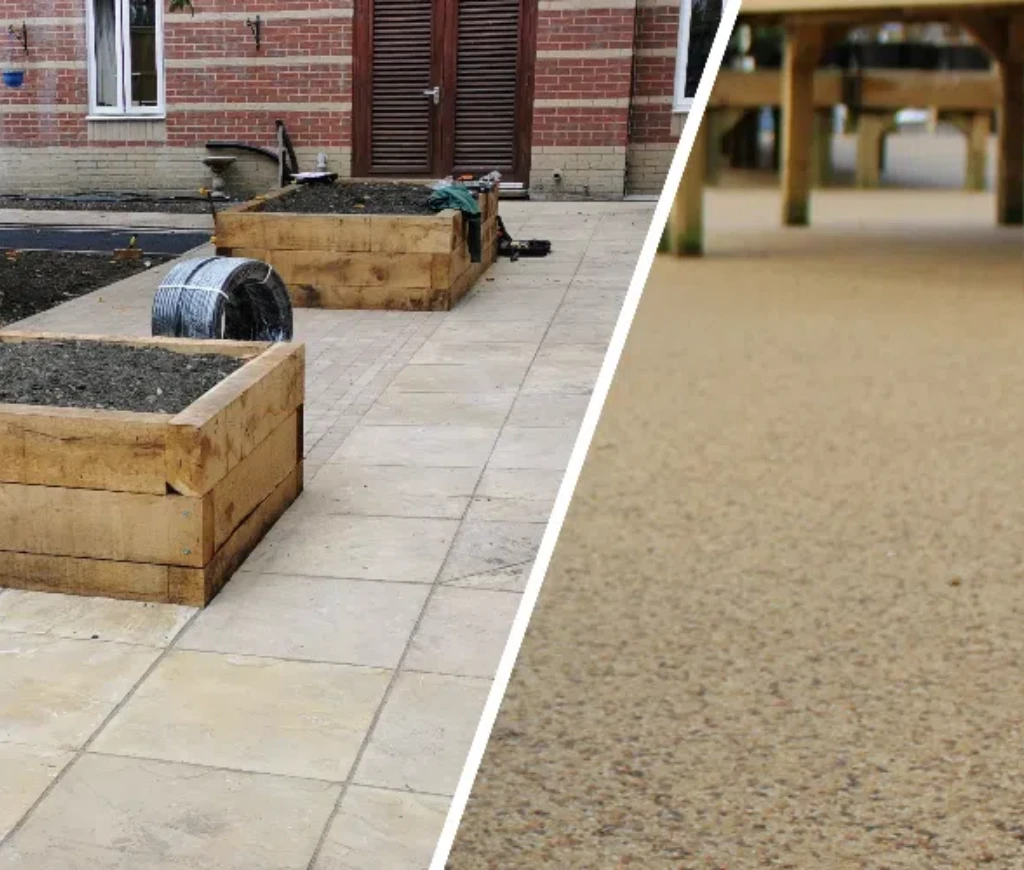
1. Appearance: Resin bound flooring offers a smooth, uniform and seamless appearance, while resin bonded surfacing creates a rougher, gravel-like texture.
2. Drainage: Resin bound systems allow water to pass through when installed over a suitable permeable base. Resin bonded surfaces require proper surface drainage to manage rainwater.
3. Grip and Safety: Both finishes can provide good traction, but resin bonded surfaces generally have a more textured feel. The final slip resistance depends on aggregate selection, installation and surface conditions.
4. Durability: Resin bound flooring holds aggregate throughout the mixed layer, reducing loose-stone movement. Resin bonded surfaces may experience aggregate loss over time, particularly in heavily used areas.
5. Maintenance: Resin bound surfaces generally require regular sweeping and occasional washing. Resin bonded surfaces may need more frequent sweeping to manage loose stones and debris.
Which Flooring Is Better for Your Outdoor Space?
If you want a smooth, attractive and permeable surface for driveways, garden paths, patios or terraces, resin bound flooring is generally the more versatile choice. Its seamless finish and drainage properties make it suitable for residential and commercial landscaping.
If your priority is a textured, gravel-like appearance or additional grip in selected areas, resin bonded surfacing may be worth considering.
Before choosing either option, assess the existing base, drainage requirements, expected foot or vehicle traffic and local weather conditions. Proper surface preparation and professional installation are essential for long-term performance.
Upgrade Your Outdoor Spaces with InstaKrete
Outdoor flooring should combine visual appeal with everyday functionality. InstaKrete offers innovative decorative surface and architectural finish solutions for residential and commercial spaces.
Whether you are exploring modern outdoor flooring, decorative textures or stylish exterior finishes, choosing the right material can transform the appearance and usability of your property.
Planning an outdoor flooring upgrade? Connect with InstaKrete to explore suitable surface finishes and find the right solution for your project.
Website: https://instakrete.in/
Frequently Asked Questions
1. Is resin bound flooring better than resin bonded surfacing?
Resin bound flooring is generally preferred for seamless finishes, drainage and reduced loose aggregate. Resin bonded surfacing is useful when a rougher, gravel-like texture is desired.
2. Is resin bound flooring waterproof?
No. It is designed to be permeable, allowing water to pass through its surface when installed over a suitable permeable base.
3. Can resin bound aggregate be used for driveways?
Yes. It is suitable for residential driveways when the correct aggregate, resin, thickness and load-bearing base are selected.
4. Does resin bonded surfacing require more maintenance?
It can require more frequent sweeping because some surface aggregate may become loose over time.
5. Where can outdoor resin flooring be installed?
Depending on the system and specification, it can be used for driveways, pathways, patios, terraces, garden areas and selected commercial outdoor spaces.