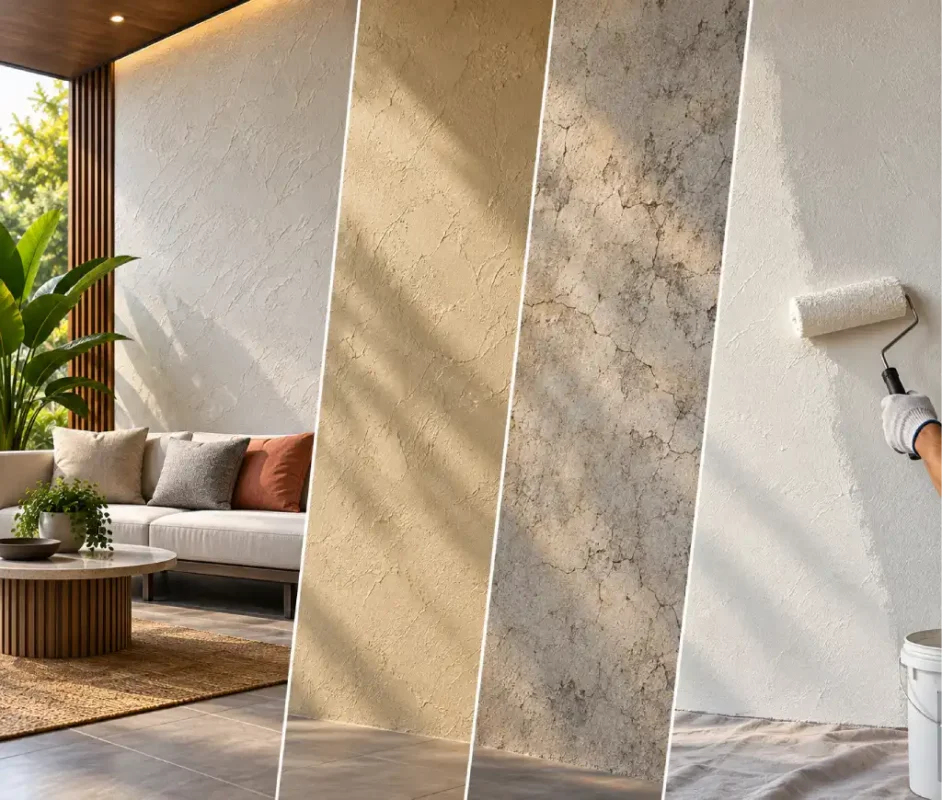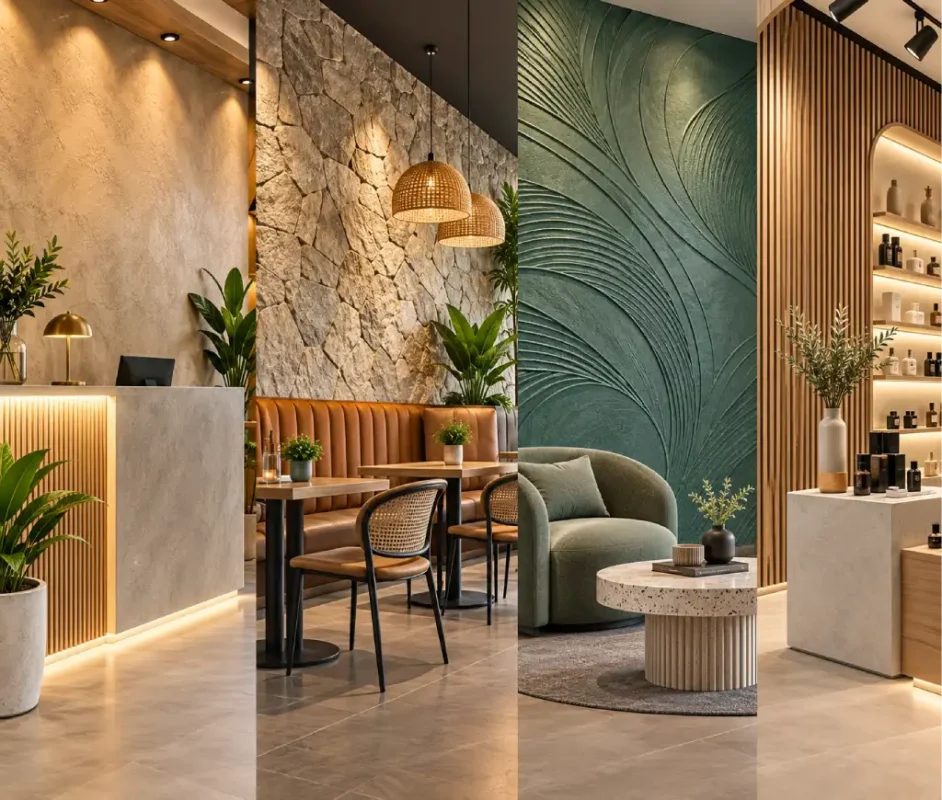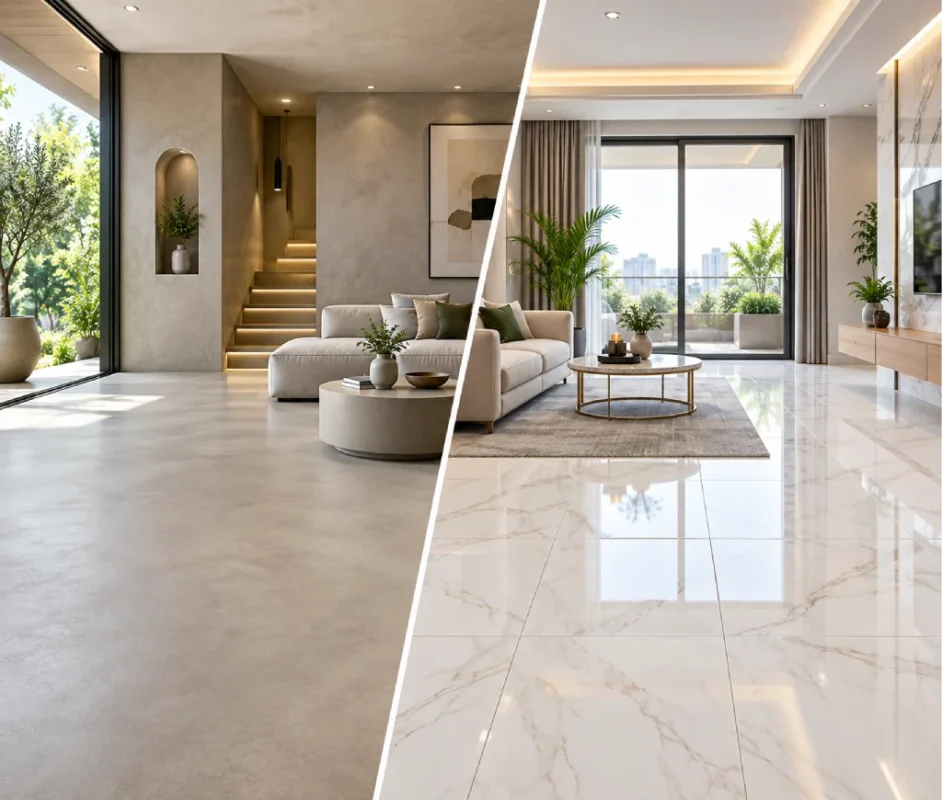

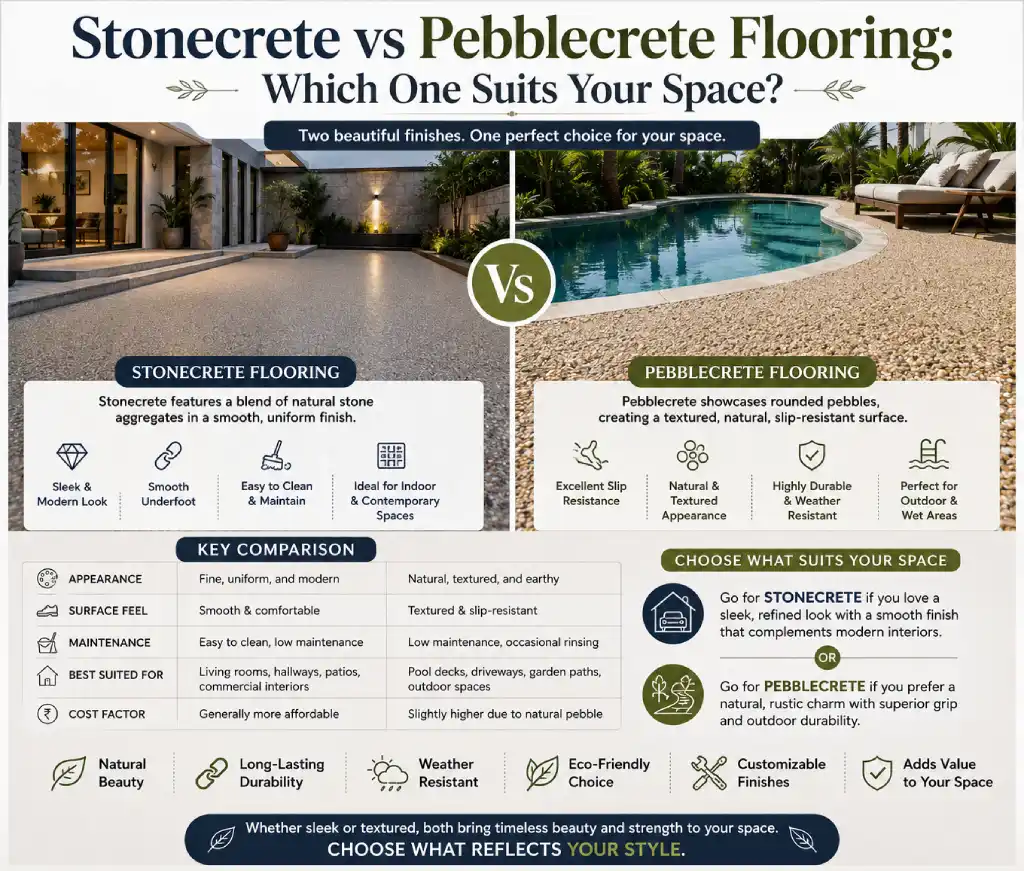
Outdoor flooring is more than just a functional surface—it’s an essential design element that influences the overall appearance, safety, and longevity of your property. Whether you’re planning a stylish driveway, a welcoming entrance, a landscaped garden, or a commercial outdoor space, choosing the right flooring material can significantly enhance both aesthetics and performance. Among the most preferred decorative concrete finishes today, Stonecrete and Pebblecrete have become popular choices due to their attractive finish, durability, and ability to withstand Indian weather conditions.
However, many homeowners and architects often compare stonecrete vs pebblecrete without fully understanding what sets them apart. While both belong to the category of exposed aggregate flooring, they differ in terms of texture, appearance, maintenance, cost, and ideal applications. Understanding these differences will help you invest in a flooring solution that complements your property’s design while offering long-term value.
Understanding Exposed Aggregate Flooring
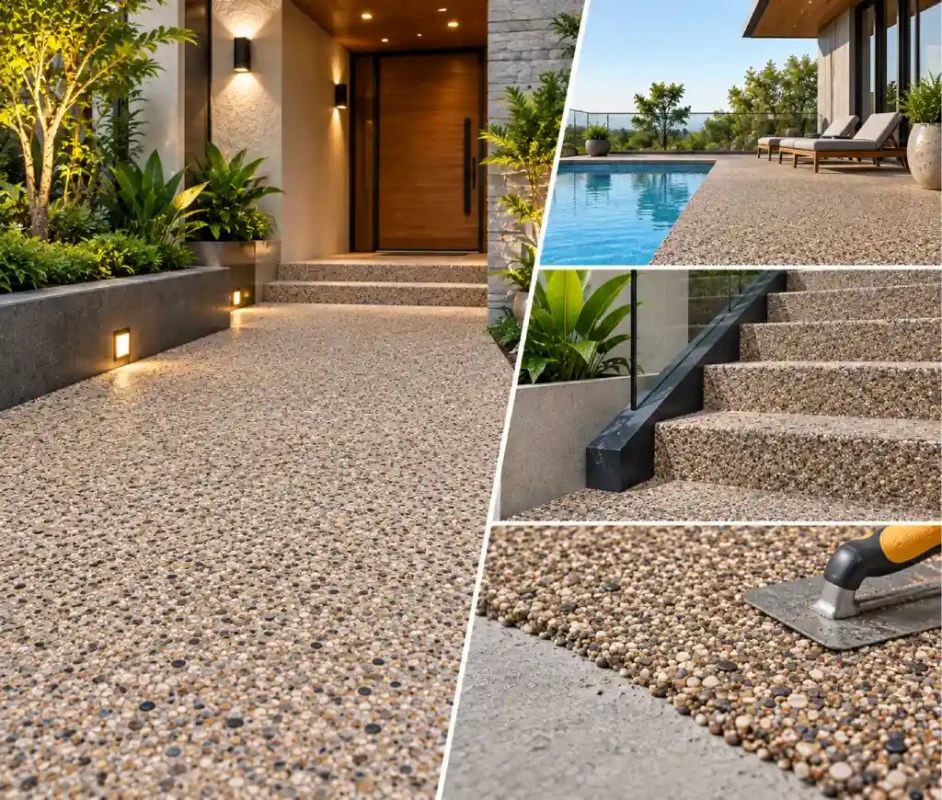
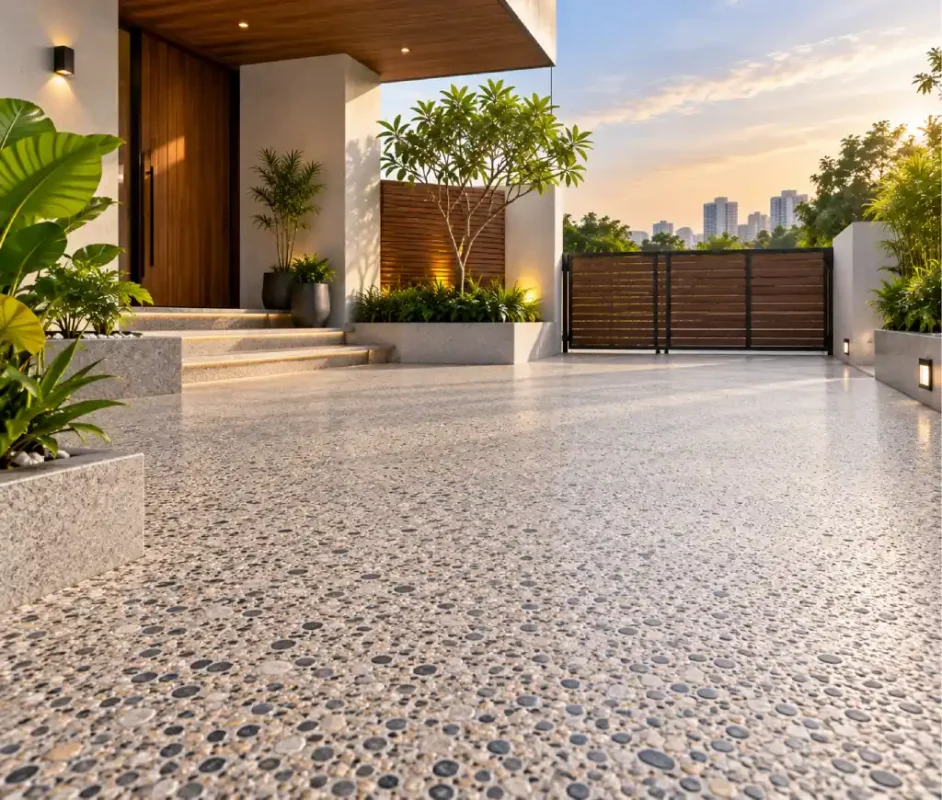
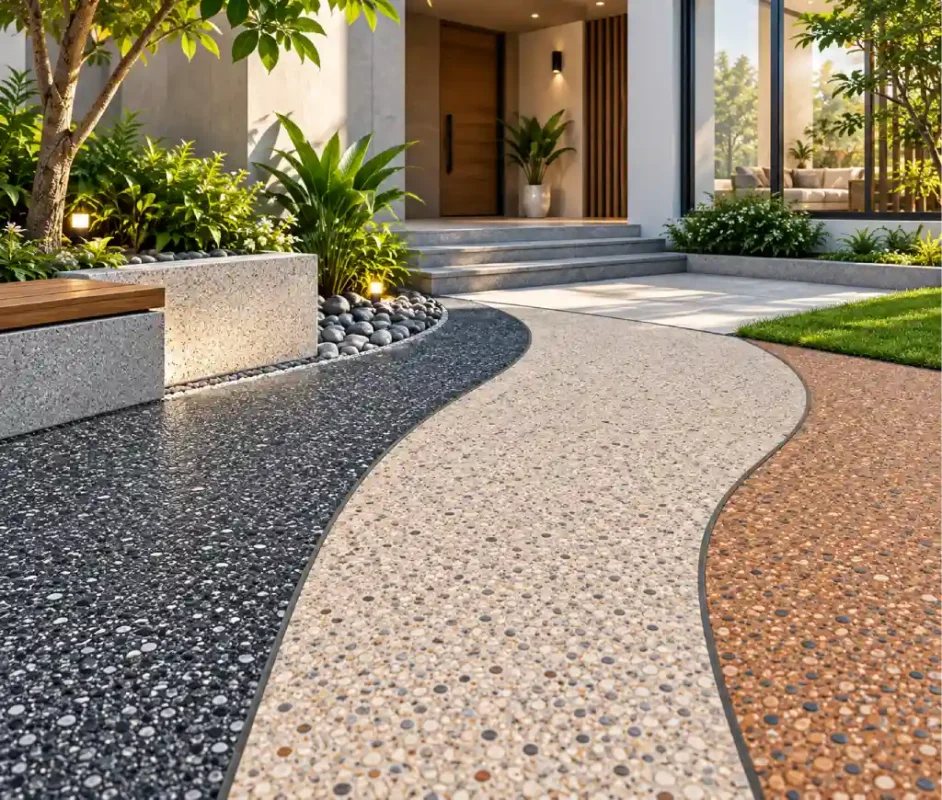
Exposed aggregate flooring is a decorative concrete technique where natural stones or pebbles are embedded into a cement-based surface. Once the concrete begins to set, the upper layer is carefully removed to expose the aggregates beneath, creating a textured and visually appealing finish. This process not only enhances the appearance of the flooring but also improves grip, making it a practical option for outdoor areas.
Unlike ordinary concrete, exposed aggregate surfaces offer greater character and can be customised using different colours, stone sizes, and textures. Because of their strength and low maintenance requirements, they are widely used for residential, commercial, and landscape projects.
What is Stonecrete Flooring?
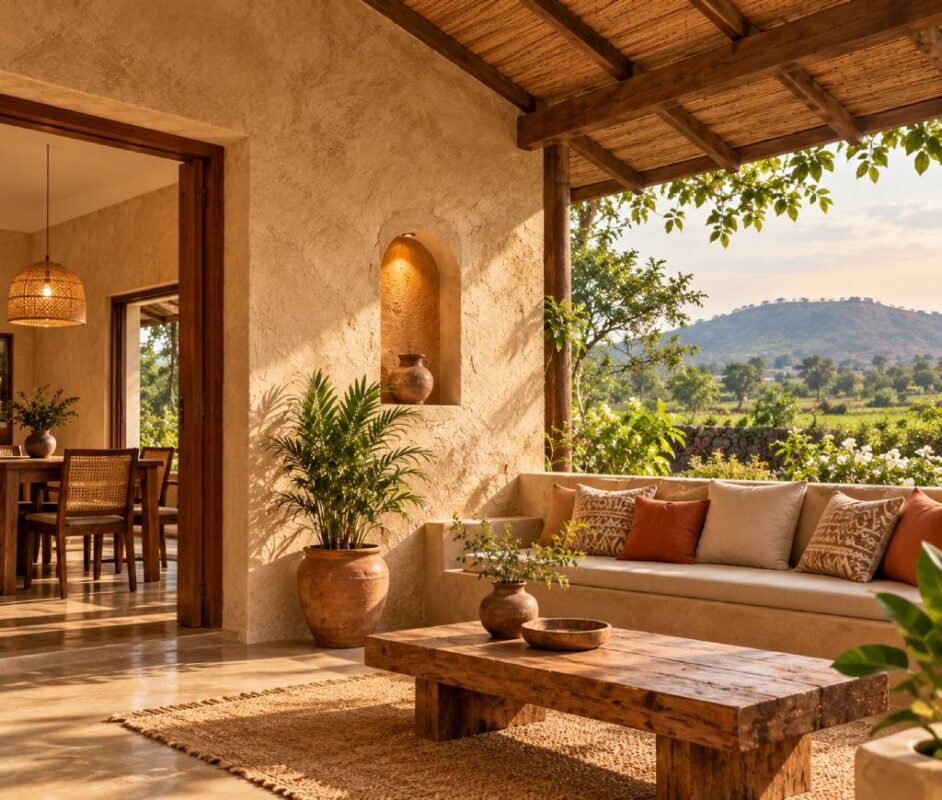
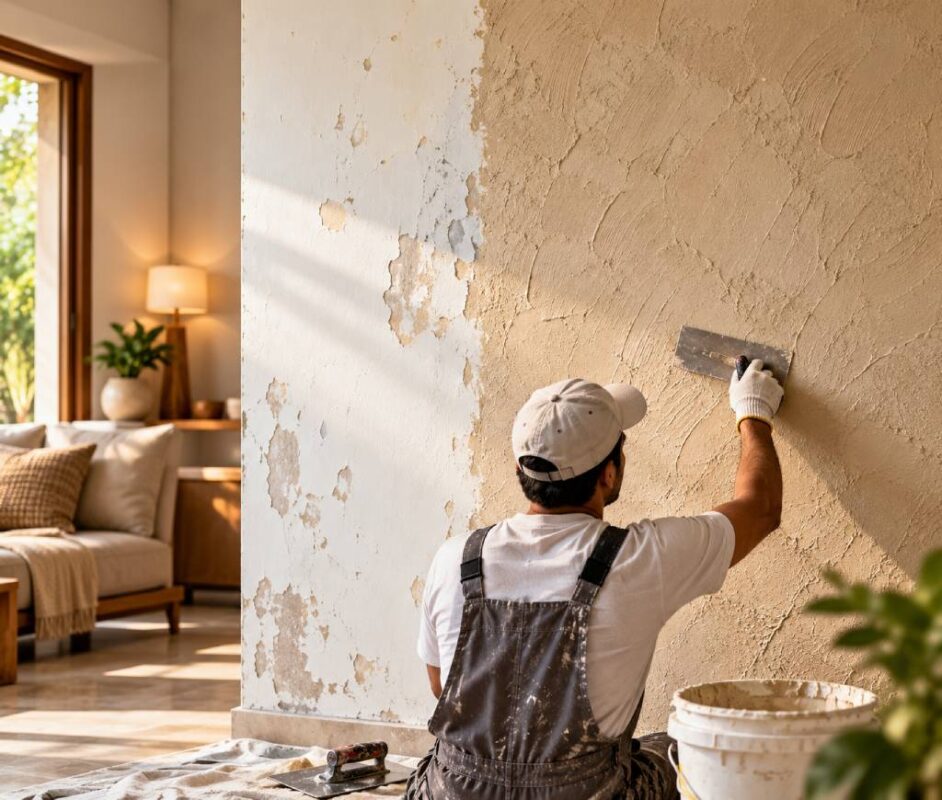
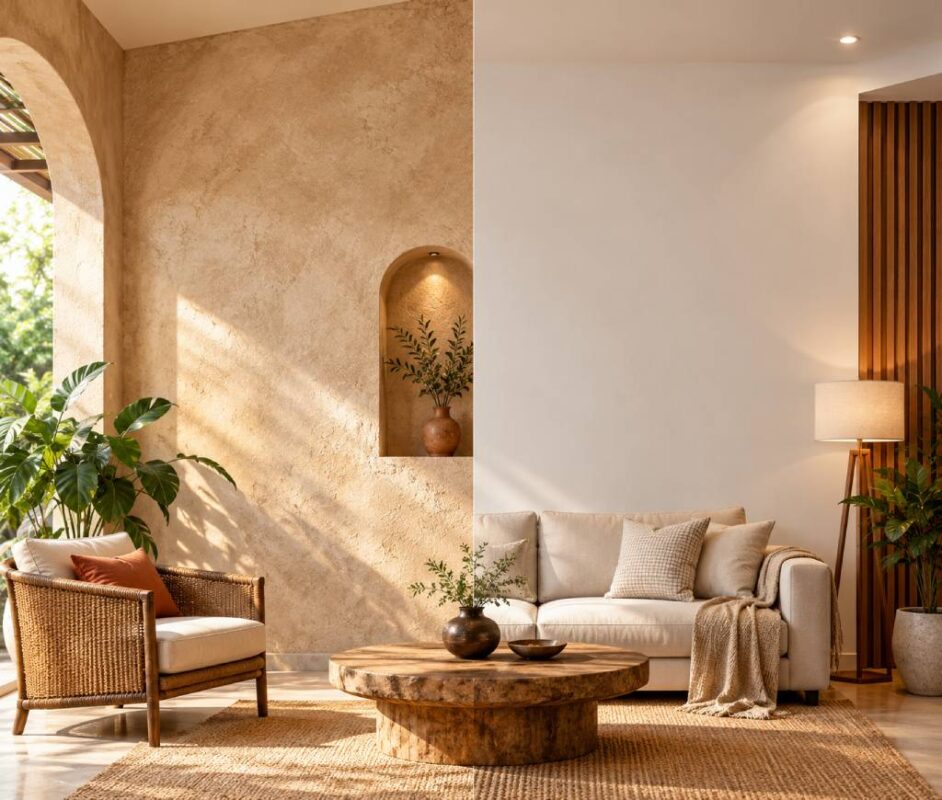
Stonecrete is a premium decorative flooring finish created using crushed natural stone aggregates mixed into a specially formulated concrete base. After installation, the surface is treated to expose the stones, giving it an elegant, seamless appearance that closely resembles natural stone paving. Also referred to as stone crete plaster, this finish is known for combining the beauty of natural materials with the durability of reinforced concrete.
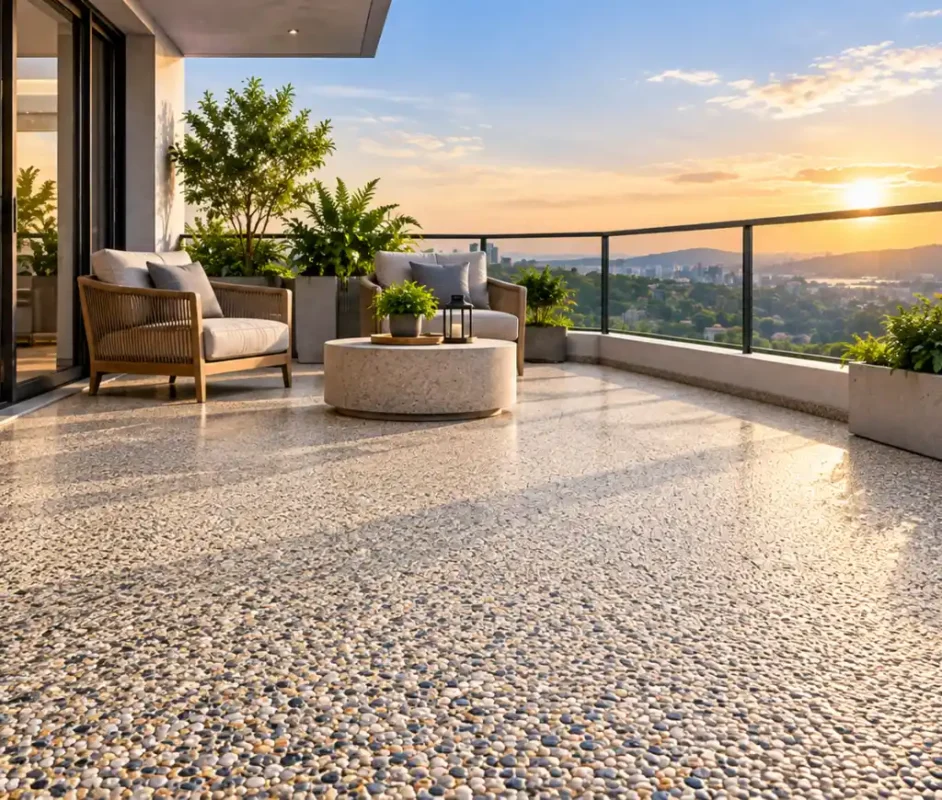
One of Stonecrete’s biggest advantages is its versatility. It complements contemporary architecture exceptionally well and is commonly used for luxury homes, villa driveways, hotel entrances, office campuses, terraces, and commercial landscapes. Since the aggregates are available in different colours and sizes, homeowners can customise the flooring to match their exterior design theme.
Apart from its visual appeal, Stonecrete is highly resistant to heavy traffic, weather changes, and daily wear. When properly sealed and maintained, it retains its finish for many years, making it an excellent long-term investment.
What is Pebblecrete Flooring?
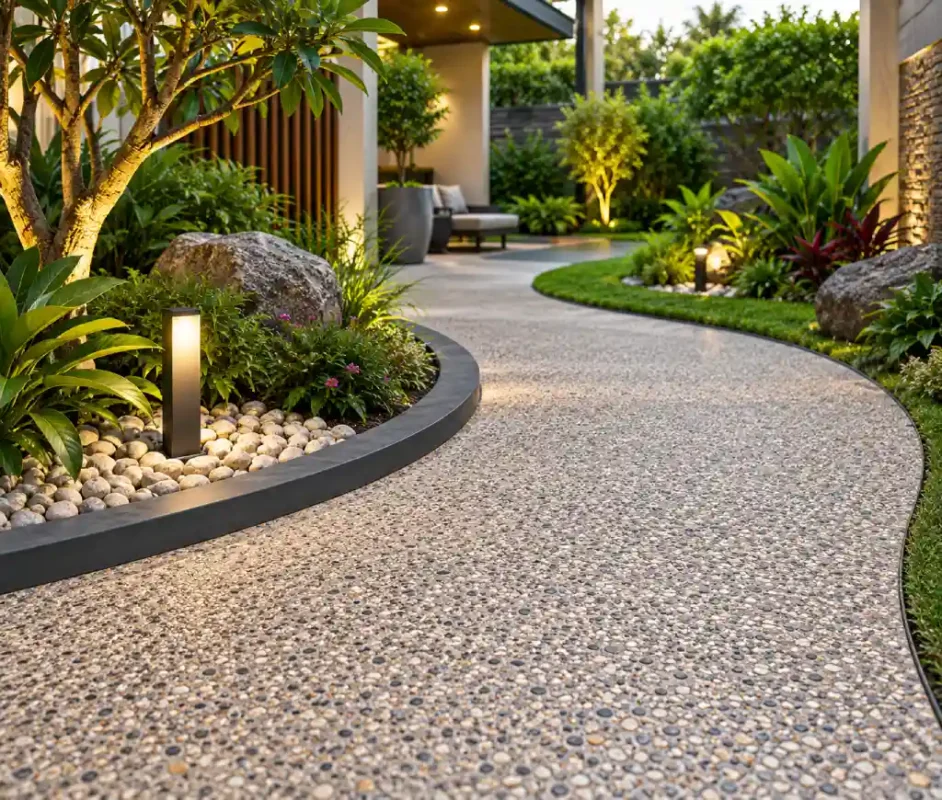
Pebblecrete is another decorative concrete finish, but instead of crushed stone, it uses naturally rounded river pebbles. After installation, the surface is washed to expose these pebbles, creating a textured finish with a more organic and rustic appearance. This type of pebble finish flooring blends beautifully with outdoor landscapes and natural surroundings.
Pebblecrete is especially popular for swimming pool decks, garden pathways, patios, courtyards, and resort landscapes because of its excellent slip resistance. The rounded pebbles create a comfortable walking surface while adding depth and texture to outdoor spaces. Homeowners who prefer earthy aesthetics often choose Pebblecrete because it integrates seamlessly with plants, water features, and natural stone landscaping.
Stonecrete vs Pebblecrete: Understanding the Difference
When comparing stonecrete vs pebblecrete, the first noticeable difference is their appearance. Stonecrete delivers a clean, elegant, and sophisticated finish that suits modern architecture. Its crushed stone aggregates create a more uniform texture, making it an excellent choice for contemporary homes and commercial spaces.
Pebblecrete, on the other hand, has a softer and more natural look. The exposed rounded pebbles create texture and visual variation, making the surface feel more relaxed and organic. It works particularly well in gardens, poolside areas, and recreational spaces where a nature-inspired design is preferred.
The difference extends beyond appearance. Stonecrete generally performs better under heavy loads, making it more suitable for driveways, parking spaces, and commercial entrances. Pebblecrete is equally durable for pedestrian areas but is primarily selected for decorative landscapes and wet environments.
Durability and Long-Term Performance
Both flooring systems are designed to withstand India’s diverse weather conditions, including heavy monsoon rains, strong sunlight, and fluctuating temperatures. However, Stonecrete usually has a slight advantage in terms of structural strength because crushed stone aggregates interlock more effectively within the concrete. This makes it ideal for areas experiencing frequent vehicle movement.
Pebblecrete is equally durable for residential outdoor spaces but performs best in locations where aesthetics and slip resistance are the primary priorities. With proper installation, both flooring options can last for decades while requiring minimal repairs.
The quality of installation plays an equally important role. Even the best decorative flooring materials can underperform if the base preparation, curing, or sealing is compromised. Choosing experienced professionals ensures the flooring remains attractive and structurally sound for years.
Maintenance Requirements
One of the reasons decorative concrete flooring has become increasingly popular is its relatively low maintenance. Stonecrete requires occasional cleaning and periodic sealing to preserve its colour and protect it from stains. Since its surface is comparatively smoother, dirt is easier to remove with regular washing.
Pebblecrete also requires very little maintenance, although dirt and debris can sometimes settle between the exposed pebbles. Pressure washing every few months is generally enough to restore its original appearance. Like Stonecrete, resealing at recommended intervals further improves its lifespan and weather resistance.
Overall, both flooring systems are far easier to maintain than natural stone paving, making them practical options for busy homeowners.
Which Flooring is Better for Driveways?
For homeowners looking at driveway flooring options, Stonecrete is often considered the better choice. Its dense structure and strong aggregate composition allow it to withstand continuous vehicle movement without losing its visual appeal. The refined finish also enhances the property’s curb appeal, creating a premium first impression.
Pebblecrete can also be installed on residential driveways, but it is generally preferred for decorative pathways and landscaped areas rather than heavy vehicular traffic. If durability and a contemporary appearance are your priorities, Stonecrete offers greater long-term value.
Which One is Better Around Swimming Pools?
Pool decks demand flooring that is attractive, safe, and comfortable underfoot. Pebblecrete excels in this environment because its textured surface provides exceptional grip even when wet. The exposed pebbles also help create a naturally cool walking surface, making it ideal for barefoot use during summer.
Stonecrete also performs well around outdoor entertainment areas but is usually selected where homeowners want a cleaner and more sophisticated architectural finish instead of a rustic landscape aesthetic.
Choosing the Right Flooring for Your Property
The decision between Stonecrete and Pebblecrete ultimately depends on how the space will be used and the design style you want to achieve. Modern homes, premium villas, office buildings, and commercial projects often benefit from the elegant finish of Stonecrete. Meanwhile, gardens, resorts, patios, and poolside landscapes are naturally complemented by the organic appearance of Pebblecrete.
Rather than focusing solely on installation costs, homeowners should consider durability, maintenance requirements, visual appeal, and long-term performance. A flooring solution that suits your property’s architecture will continue adding value for many years.
Why Choose Instakrete?
At Instakrete, we specialise in premium decorative flooring solutions that combine innovative design with lasting durability. Whether you’re planning a stylish Stonecrete driveway, a Pebblecrete garden pathway, or a customised outdoor landscape, our experienced team provides end-to-end solutions using high-quality materials and proven installation techniques.
Every project is designed to match the client’s vision while ensuring exceptional performance in Indian weather conditions. From consultation and design to installation and finishing, our focus is on delivering decorative concrete surfaces that are both visually striking and built to last.
Conclusion
The comparison between stonecrete vs pebblecrete isn’t about which flooring is universally better—it’s about selecting the right solution for your specific space. Stonecrete offers a refined, contemporary finish with exceptional strength, making it ideal for driveways, entrances, and commercial properties. Pebblecrete, with its natural texture and excellent slip resistance, remains the preferred choice for gardens, pool decks, and landscape areas.
Since both options are forms of exposed aggregate flooring, they provide excellent durability, weather resistance, and timeless visual appeal. By understanding the strengths of each system and working with experienced professionals like Instakrete, you can create an outdoor space that is both functional and beautifully designed for years to come.